
When a dental clinic searches for marketing firms near me, the goal is usually not just to find the closest agency. The real need is to attract more suitable patients, improve local search visibility, strengthen the clinic’s online presence, and make sure enquiries from Google, ads, websites, and dentist directory listings are being tracked properly.
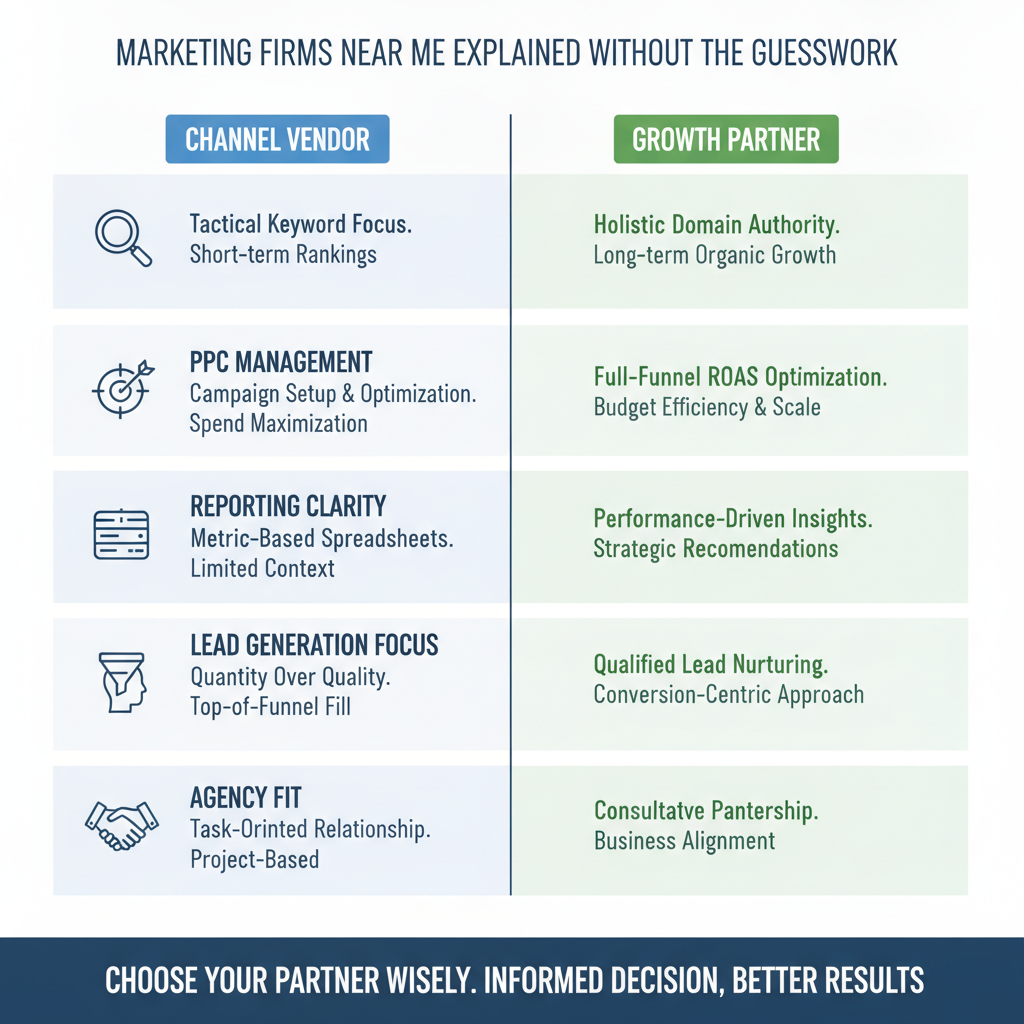
For a broader business-focused explanation, this guide on marketing firms near me explains how to compare agencies without relying on vague promises. For dental practices, the same principle applies: the best marketing partner is the one that connects visibility to patient enquiries, appointment requests, and measurable growth.
A dental practice has different marketing needs than an online store or general service business. Patients often compare nearby dentists through Google Maps, clinic websites, reviews, emergency dental searches, treatment pages, and dentist directories. That means your marketing firm should understand both local discovery and the trust-building steps that happen before someone books an appointment.
What dental clinics usually mean by “marketing firms near me”
Most dental clinics are not simply looking for a nearby office. They are looking for a team that can help them become more visible when local patients search for services such as family dentistry, cosmetic dentistry, dental implants, emergency dental care, teeth whitening, orthodontic consultations, or routine checkups.
A capable marketing firm for dentists may support local SEO, Google Ads, website improvements, conversion tracking, content planning, review visibility, and profile optimization. For clinics listed in a dentists directory, the work may also include making sure directory information, website details, phone numbers, service descriptions, and location signals are consistent across the web.
If search visibility is the main concern, professional SEO Services may be a central part of the plan. If the clinic needs appointment enquiries sooner, paid search and landing page improvements may need attention first. The right mix depends on where the clinic is losing potential patients: discovery, trust, conversion, or follow-up.
Why dental marketing depends heavily on local intent
Dental searches are often local and action-oriented. A patient searching for “dentist near me,” “emergency dentist open now,” or “Invisalign dentist near me” is usually comparing nearby options, not reading general information for fun. This makes local search visibility especially important for dental practices.
A marketing firm that works well for dentists should understand how local intent appears across different channels. A patient may find a clinic through Google Maps, a dentists directory, an organic search result, a paid ad, or a treatment-specific landing page. Each path should lead to clear information, trust signals, and an easy next step such as calling, requesting an appointment, or viewing clinic hours.
This is why a broad Digital Marketing Services approach can be useful when a dental clinic needs several pieces working together. SEO, PPC, website content, local profile optimization, and tracking should not operate in isolation if the goal is steady patient acquisition.
How to judge whether a marketing firm is right for a dental practice
Proximity can be helpful, especially if the clinic wants face-to-face strategy discussions. But nearness alone does not prove that a firm understands dental marketing. A better question is whether the firm can explain how it will help patients find, evaluate, and contact the clinic.
Start by looking at the clinic’s current bottleneck. If the website receives traffic but few appointment requests, the problem may be weak calls to action, unclear treatment pages, limited trust signals, or poor mobile usability. If the clinic is not appearing for relevant local searches, the issue may involve technical SEO, content depth, local business profile quality, or inconsistent directory information.
Dental practices should also ask how the agency separates general awareness from appointment-driven marketing. Impressions and clicks are useful, but they do not tell the full story. A strong firm should be able to connect campaigns to calls, form submissions, booking requests, and the quality of patient enquiries.
What strong marketing firms do for dental clinics
Step 1: Confirm tracking before increasing spend
Before a clinic invests more in ads, SEO, or directory promotion, it should know whether phone calls, appointment forms, website actions, and key landing pages are being tracked correctly. Without clean tracking, a clinic may not know which channels are actually generating patient enquiries.
Watch for: Reports that only show clicks, rankings, or impressions without explaining how those actions connect to calls or bookings.
Why it matters: Dental marketing decisions become more reliable when the clinic can see which services, pages, and campaigns are producing meaningful enquiries.
Step 2: Match dental search intent to the right page
Not every patient should land on the homepage. Someone searching for emergency dentistry should find emergency dental information. Someone researching implants should reach a relevant implant dentistry page. A good marketing firm aligns search terms, ads, and organic pages with the patient’s intent.
Watch for: Campaigns that send all traffic to a general homepage with no clear service pathway.
Why it matters: Patients are more likely to take the next step when the page answers the specific question that brought them there.
Step 3: Strengthen local visibility and directory consistency
Dental clinics often depend on local visibility across Google, map results, review platforms, clinic websites, and dentist directories. Accurate clinic details help patients and search engines understand where the practice is located, what services it offers, and how to contact it.
Watch for: Inconsistent names, addresses, phone numbers, business hours, service descriptions, or website links across online profiles.
Why it matters: Consistent local information can reduce confusion and support stronger visibility where patients compare nearby dentists.
Step 4: Improve treatment pages and calls to action
A dental website should make it easy for patients to understand services, clinic location, appointment options, and next steps. If pages are slow, vague, or difficult to navigate on mobile, even strong traffic may not turn into enquiries.
Watch for: Treatment pages with thin content, unclear booking buttons, missing contact information, or forms that are difficult to complete.
Why it matters: Better page clarity can help the clinic get more value from existing traffic before increasing marketing spend.
Step 5: Review performance on a steady schedule
Dental marketing should not rely on random updates. A disciplined agency reviews search queries, campaign structure, landing pages, technical issues, directory profiles, and enquiry quality on a regular basis.
Watch for: Monthly reports with no clear recommendations or no explanation of what changed.
Why it matters: Consistent refinement helps marketing become more useful over time instead of restarting with each new campaign idea.
SEO, PPC, and dentist directories each solve a different problem
SEO helps a dental clinic build organic visibility for local and treatment-related searches over time. This may include service pages, location relevance, technical improvements, internal linking, and content that answers patient questions.
PPC can help clinics reach high-intent searchers faster through paid placements. If a practice wants to promote a specific service, test a new treatment page, or support short-term appointment demand, Google Ads Management may be useful alongside SEO.
Dentist directory listings support discovery and comparison. Patients using a directory may already be looking for nearby dental options, so the clinic’s profile should be clear, accurate, and aligned with the website. A directory listing should not replace the clinic’s website or search strategy, but it can support the patient’s decision-making journey.
How these channels often work together
- SEO: Builds long-term visibility for treatment pages, local searches, and patient education content.
- PPC: Supports faster testing and demand capture for high-intent dental searches.
- Directory presence: Helps patients compare local dentists and verify clinic information.
- Website improvements: Turn traffic from all channels into calls, forms, and appointment requests.
Questions dental clinics should ask before hiring a marketing firm
Before choosing among marketing firms near you, ask practical questions about process, reporting, and dental patient acquisition. A polished proposal is less important than a clear explanation of what the agency will review, how it will measure results, and what it will improve first.
- How will patient enquiries be tracked? Ask whether phone calls, appointment forms, and key website actions can be measured.
- Which services should be prioritized? A clinic may not need to promote every treatment equally at the same time.
- How will local visibility be improved? Look for answers involving business profiles, service pages, location signals, reviews, and directory consistency.
- Will landing pages be reviewed? Traffic alone is not enough if treatment pages do not explain the service clearly.
- What will be reported each month? Useful reporting should connect marketing activity to enquiries and practical next steps.
It is also worth asking what the firm would avoid doing immediately. Experienced marketers do not always recommend every channel at once. For some clinics, the first priority may be technical SEO and local profiles. For others, it may be paid search, better service pages, or conversion tracking.
What return from dental marketing usually depends on
Marketing return for a dental clinic is shaped by more than rankings or ad clicks. Patient intent, service demand, location, competition, website clarity, response speed, reviews, treatment page quality, and tracking accuracy all affect results.
For example, a clinic may appear in search results but lose potential patients if the website does not clearly show services, location, hours, accepted appointment types, or contact options. Another clinic may receive enquiries from ads but struggle if calls are missed or follow-up is slow.
A good marketing firm should look at the full path from search to appointment request. That includes how patients discover the clinic, what information they see, whether the page builds trust, and how easy it is to contact the practice.
Important factors to review
- Search intent: High-intent dental searches often matter more than broad informational traffic.
- Page relevance: Service-specific pages usually support clearer patient decisions than generic pages.
- Local trust signals: Reviews, accurate profiles, and consistent directory details can influence patient comparison.
- Mobile experience: Many patients search on mobile, so speed and simple contact options are important.
- Follow-up process: Marketing can generate enquiries, but clinic response still affects appointment outcomes.
How smaller dental practices can compete online
Independent dental clinics do not always need to outspend larger competitors. They often need sharper local positioning, stronger service pages, better directory profiles, clear calls to action, and consistent follow-up. Precision can matter more than campaign volume.
A smaller clinic may gain more from improving a few important treatment pages, cleaning up local listings, and tracking calls properly than from launching many disconnected campaigns. The same applies to website design: a simple, fast, patient-focused website can be more useful than a complex design that does not support search intent or appointment requests.
For dental practices, the strongest marketing plans usually focus on the services that matter most, the locations the clinic serves, and the questions patients ask before choosing a dentist.
FAQs About Marketing Firms Near Me for Dentists
Does a dental clinic need a local marketing firm?
A local firm can be helpful, but physical distance is less important than experience with local SEO, dental search intent, tracking, and clear communication. The firm should understand how patients compare nearby dental providers.
Should dentists invest in SEO or Google Ads first?
It depends on timing and current visibility. SEO supports long-term organic visibility, while Google Ads can help reach high-intent searchers faster. Many clinics benefit from using both in a coordinated way.
How do dentist directory listings fit into marketing?
Dentist directories can help patients discover and compare local clinics. A directory profile should have accurate contact details, service information, and a clear connection to the clinic’s website or booking process.
What should a dental marketing report include?
A useful report should explain what changed, which channels generated enquiries, how calls or forms are being tracked, and what actions are recommended next. Rankings and clicks are helpful but incomplete on their own.
What is the biggest mistake clinics make when hiring a marketing firm?
One common mistake is choosing based only on price, proximity, or promises. Clinics should look for a clear process, proper tracking, local search knowledge, and an understanding of how patients choose dental care.
A practical way to compare marketing firms near you
The best marketing firm for a dental practice is not always the closest or the loudest. It is usually the team that can diagnose the clinic’s real bottleneck, explain the plan clearly, measure patient enquiries properly, and improve the full path from online discovery to appointment request.
For some dental clinics, that starts with SEO. For others, it starts with paid search, directory consistency, better treatment pages, or cleaner tracking. The smartest approach is to identify what is holding growth back first, then choose the firm best equipped to fix it.
If a clinic wants help evaluating SEO, PPC, website performance, or tracking, Zigma Internet Marketing provides digital marketing support across search, paid media, web, and analytics. For tailored questions, visit 📩 Ask an SEO/PPC question.