
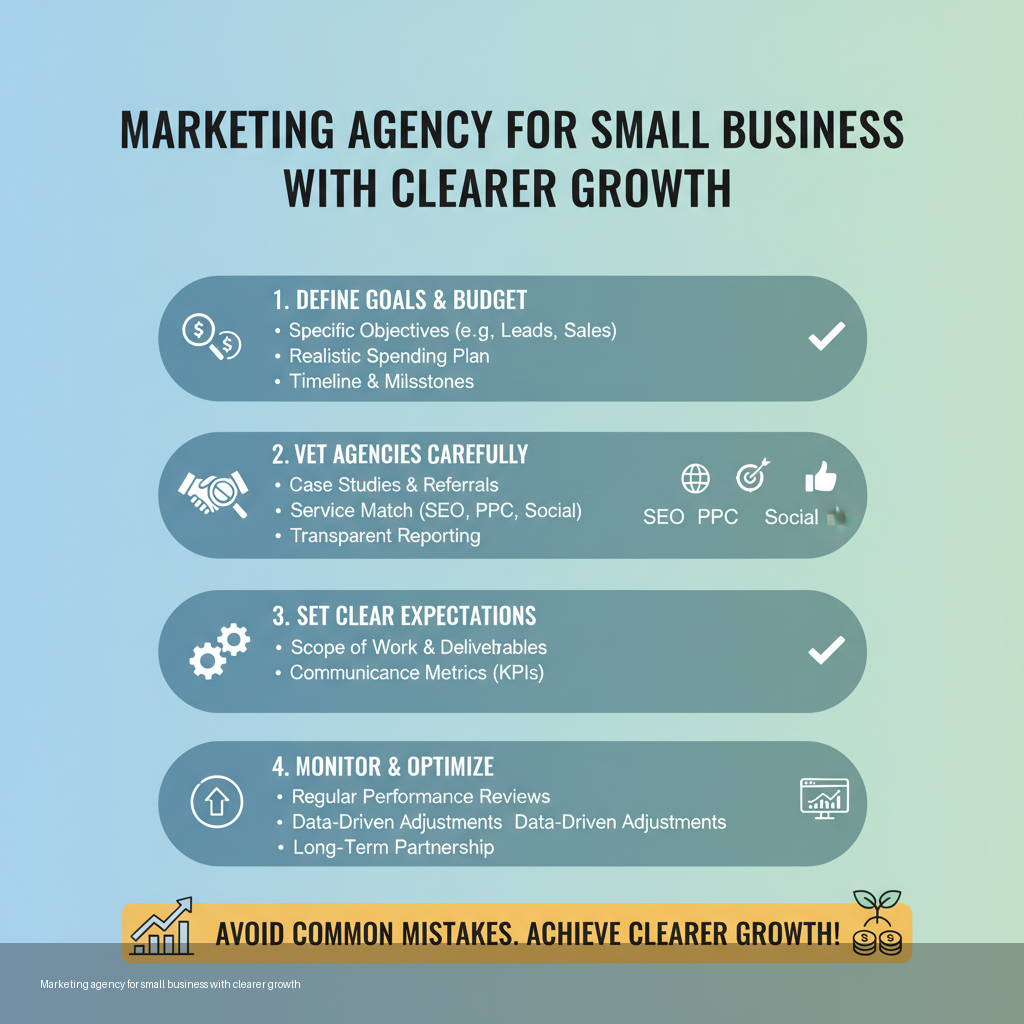
A marketing agency for small business can help dental clinics turn online visibility into patient enquiries instead of disconnected activity. For dentists, that often means coordinating local SEO, directory listings, Google Business Profile improvements, service-page content, paid search, website updates, and call or form tracking so potential patients can find and contact the right practice at the right time.
Dental practices listed in a dentists directory already understand the value of being discoverable, but a directory profile is only one part of a broader patient acquisition system. For a broader small-business perspective, this guide to a marketing agency for small business explains why structure matters more than simply doing more marketing.
Many dental offices try to handle marketing in pieces: a boosted social post here, a website update there, a few ads during a slow month, or occasional blog content. The problem is rarely effort. The issue is that each action needs to support a clear path from search to profile view, from profile view to website visit, and from website visit to appointment request.
Why dental practices need structured marketing
Dental marketing is highly local and service-specific. Someone looking for emergency dentistry, Invisalign, dental implants, teeth whitening, or a family dentist is usually comparing nearby options quickly. A practice may appear in a directory, search result, map listing, or paid ad, but the patient still needs enough confidence to call, book, or submit a form.
A marketing agency helps connect those touchpoints. Instead of treating a directory profile, website, Google listing, ads, and reviews as separate assets, a coordinated plan makes them work together. For example, a directory listing can support visibility, while a strong service page answers treatment-specific questions, and tracking shows which channels are actually producing patient enquiries.
If a dental clinic is considering broader Digital Marketing Services, the decision should be based on whether the current marketing system can reliably attract and measure qualified patient interest. A practice does not need to be large to benefit from professional support. It needs enough growth opportunity, competition, or marketing complexity to justify a more disciplined approach.
What a marketing agency does for a dental clinic
A capable agency does more than publish posts or manage ads. For dental practices, the work may include local keyword research, profile optimization, service-page improvements, paid search campaigns, landing page updates, conversion tracking, review strategy guidance, and reporting that connects marketing activity to calls and appointment requests.
For example, SEO Services can help a dental website appear for relevant local searches, while paid campaigns can support time-sensitive or high-intent services. Directory visibility can also strengthen the patient journey when the practice profile is complete, accurate, and aligned with the clinic’s website and local search presence.
The practical value is coordination. A clinic may have one person managing social media, another handling website edits, and someone else checking directory information. Without a shared strategy, gaps appear. Ads may send traffic to a weak page, a directory profile may list outdated details, or the website may receive visitors without clear appointment calls to action.
How dentists should evaluate agency fit
Dental practices should judge an agency by how well it understands local search behaviour, patient decision-making, and conversion paths. A good agency should be able to explain how patients find dentists, what information they compare, and how marketing activity will be tracked after the first click.
For clinics in competitive cities or service areas, generic marketing promises are not enough. Patients often compare several dentists before contacting one. That means your online presence needs to communicate location, services, availability, trust signals, and contact options clearly across your website, directory listings, and search profiles.
Questions dentists should ask before hiring an agency
- Local search strategy: How will the agency improve visibility for the clinic’s actual service area?
- Directory alignment: Will directory profiles, website information, and Google Business Profile details stay consistent?
- Service-page quality: Will important dental services have clear, relevant pages for patients and search engines?
- Conversion tracking: Will calls, forms, appointment requests, or other patient actions be measured?
- Reporting clarity: Will reports connect traffic and campaign activity to real enquiries rather than only clicks?
Where a dentists directory fits into the marketing system
A dentists directory can support discovery by helping patients compare practices based on location, services, and contact details. However, a directory listing works best when it is part of a wider online presence. If the directory profile attracts interest but the website is unclear, slow, incomplete, or inconsistent, potential patients may continue comparing other clinics.
For dental clinics, directory optimization should support the same message used across the website and search listings. The practice name, address, phone number, service categories, appointment information, and descriptions should be accurate and consistent wherever patients encounter the clinic online.
A marketing agency can help ensure that directory visibility does not sit in isolation. It can connect directory traffic with service pages, location pages, analytics, paid campaigns, and local SEO work so the clinic has a clearer view of what is producing enquiries.
SEO vs PPC for dental practices
Search engine optimization and pay-per-click advertising serve different purposes for dental clinics. SEO is often better for building long-term visibility around services, local searches, patient questions, and location-based terms. PPC can be useful when a clinic wants faster visibility for high-intent searches or specific services.
For example, a dental clinic may use SEO to strengthen visibility for family dentistry, preventive care, or local dentist searches over time. Paid search may be used for services where immediate visibility matters, such as emergency dental care or specific treatment-related campaigns. The right balance depends on competition, budget, service mix, and how quickly the practice needs new patient enquiries.
Many dental clinics benefit from using both channels in a coordinated way. Paid campaigns can reveal which searches and messages generate interest, while SEO can build more durable visibility for proven topics. Over time, the practice can use campaign data to improve service pages, directory descriptions, and patient calls to action.
A simple comparison for dentists
- SEO fits best when a clinic wants long-term local visibility and stronger organic presence.
- PPC fits best when a clinic needs faster exposure for specific services or high-intent searches.
- Directory visibility fits best when patients are actively comparing nearby dental practices.
- A combined strategy fits best when the clinic wants both immediate enquiries and long-term search strength.
What affects ROI in dental marketing
Return on marketing investment is shaped by more than ad spend or website traffic. For dental practices, results often depend on search intent, service relevance, location accuracy, page quality, trust signals, appointment availability, and how quickly the clinic responds to enquiries.
A campaign may generate clicks but underperform if the landing page is too general. A directory listing may receive views but fail to produce calls if contact details are incomplete. SEO may increase traffic, but if visitors cannot easily find services, insurance information, location details, or appointment options, the clinic may not see the full benefit.
Tracking is also essential. Without proper analytics, call tracking, form tracking, or conversion setup, a dental practice may not know which channels are producing patient interest. That can lead to decisions based on assumptions rather than evidence.
ROI factors dental clinics can control
- Service clarity: Pages and profiles should make it obvious which treatments the clinic provides.
- Location accuracy: Address, phone number, hours, and service area details should be consistent.
- Contact paths: Patients should be able to call, request an appointment, or find directions easily.
- Page relevance: Dedicated pages usually work better than sending every visitor to a general homepage.
- Response process: Marketing can create enquiries, but the clinic still needs a reliable follow-up process.
Signs a dental practice is ready for agency support
1. New patient enquiries are inconsistent
If appointment requests rise and fall without a clear explanation, the clinic may need better tracking and channel coordination. An agency can help identify whether enquiries are coming from organic search, paid ads, directory profiles, referrals, or direct website visits.
2. The clinic appears online but does not convert enough visitors
Visibility is only useful when it leads to action. If patients are finding the practice but not contacting it, the issue may be unclear service pages, weak calls to action, missing trust signals, or friction in the booking process.
3. Directory and local listings are inconsistent
Dental practices depend heavily on local accuracy. If phone numbers, business hours, addresses, or service descriptions differ across platforms, patients may lose confidence or contact another clinic instead.
4. Paid campaigns are running without clear measurement
Paid search can be valuable, but only when search terms, landing pages, calls, forms, and appointment actions are reviewed regularly. Without tracking, a clinic may not know whether ad spend is creating meaningful patient opportunities.
5. Marketing tasks are being delayed
Many dental teams know their website, profiles, or campaigns need attention but do not have time to manage them consistently. Agency support can help keep improvements moving while the clinic focuses on patient care.
How dental clinics can compete locally online
Dental practices do not always need to outspend larger competitors. They often need to be more relevant, easier to contact, and clearer about the services they provide. A focused clinic with accurate listings, useful service pages, strong local signals, and a complete directory profile can create a better patient experience than a larger competitor with generic messaging.
Local competition is usually won through details. Patients want to know where the clinic is, what services are available, whether appointments are accessible, and whether the practice seems trustworthy. Search visibility matters, but so does the experience after a patient clicks.
Areas where smaller dental practices can gain ground
- Clear specialization: Highlight important services such as family dentistry, cosmetic dentistry, orthodontics, or emergency care where relevant.
- Accurate listings: Keep directory profiles, Google Business Profile information, and website details consistent.
- Better service pages: Explain services in patient-friendly language and provide clear next steps.
- Faster updates: Smaller practices can often update pages, profiles, and campaigns more quickly.
- Smoother contact experience: Make appointment requests, calls, directions, and office information easy to find.
What dentists should expect from a good marketing partner
A good agency should not simply sell a package. It should explain priorities, identify gaps, recommend channels based on the clinic’s goals, and show how performance will be measured. For dental practices, that means understanding the full path from patient search to booked appointment.
The best fit is usually an agency that can connect SEO, PPC, website improvements, directory visibility, tracking, and reporting. Creative work matters, but dental marketing also requires operational discipline: accurate data, clear service pages, reliable conversion tracking, and regular optimization.
If a clinic is reviewing options, it can be useful to ask how the agency would improve the practice’s current online footprint before increasing spend. Sometimes the first opportunity is not more traffic. It may be better profile consistency, stronger landing pages, cleaner analytics, or clearer appointment calls to action.
A practical next step for dental practices
If your dental clinic is comparing marketing agencies, start with an audit of your current patient journey. Review how your practice appears in directories, local search results, paid ads, and your own website. Then look at whether calls, forms, and appointment requests are being measured accurately.
For practices that need structured support, Zigma Internet Marketing offers services connected to SEO, PPC, landing pages, reporting, and ongoing optimization. You can 📩 Ask an SEO/PPC question or review Google Ads Management if paid search is part of your clinic’s growth plan.
FAQs About Marketing Agencies for Dental Practices
Does every dental clinic need a marketing agency?
No. A clinic may be able to manage marketing internally if it has the time, skills, and tracking systems in place. An agency becomes more useful when marketing tasks are delayed, competition is increasing, or the practice cannot clearly connect online activity to patient enquiries.
Should a dental practice focus on SEO or paid ads first?
It depends on the clinic’s timeline and goals. SEO is often better for long-term local visibility, while paid ads can provide faster data and visibility for specific services. Many practices use both, with paid campaigns supporting immediate needs while SEO builds over time.
How does a dentists directory help with marketing?
A dentists directory can help patients discover and compare local practices. It works best when the profile is accurate, complete, and consistent with the clinic’s website, search listings, and service information.
What should dentists track in their marketing reports?
Dental clinics should track actions close to patient acquisition, such as calls, appointment forms, direction requests, and booked consultations where available. Traffic, impressions, and rankings can be useful, but they should not replace enquiry-focused reporting.
Can a small dental practice compete with larger clinics online?
Yes. Smaller practices can compete by being more locally relevant, clearer about services, consistent across directories, and easier to contact. Strong service pages, accurate listings, and a focused local strategy can help a smaller clinic stand out.
Related Topics:
- local SEO for dentists
- dental practice marketing
- dentists directory listings
- Google Ads for dental clinics
- conversion tracking for appointment requests