Categories
Uncategorized

5 Tips for Laser Hair Removal Before Summer: A Directory Guide for Dental and Cosmetic Care Visitors

Plan Summer Appointments With Your Whole Appearance in Mind

People using a dentists directory are often planning more than a routine checkup. Summer can bring weddings, vacations, graduations, outdoor photos, and social events where patients may think about teeth whitening, smile confidence, skin care, and grooming at the same time. If laser hair removal is part of your seasonal self-care plan, timing matters just as much as choosing the right provider.

This guide reframes the 5 tips for laser hair removal before summer time for readers who are already comparing local health, dental, and cosmetic service providers. Laser hair removal is not a same-day substitute for shaving or waxing. It is a planned treatment process that works with hair growth cycles, skin condition, sun exposure, and appointment spacing.

For directory users, the main takeaway is simple: treat laser hair removal the way you would treat cosmetic dental planning. You would not schedule whitening, veneers, or orthodontic adjustments without considering timing, suitability, aftercare, and provider qualifications. The same thoughtful approach helps when comparing laser hair removal clinics before summer.

Why Summer Timing Matters for Laser Hair Removal

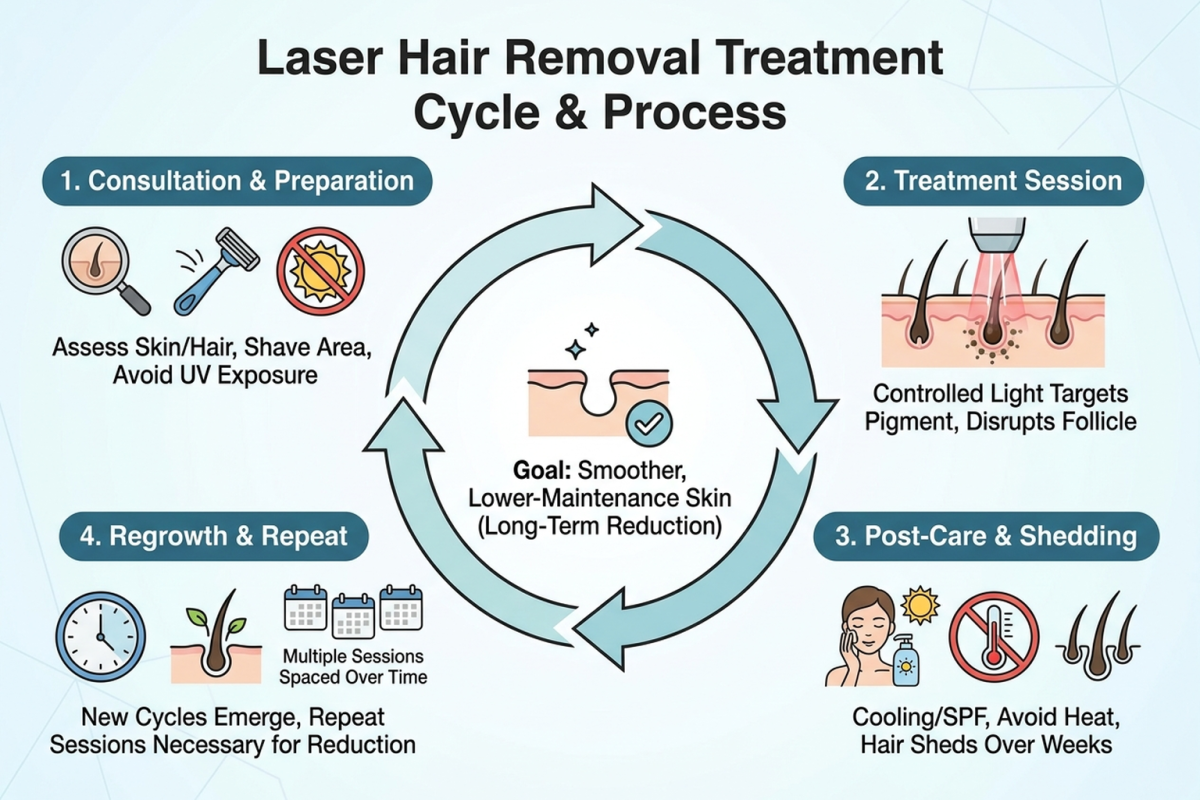
Laser hair removal targets pigment in active hair follicles. Because not every follicle is active at the same time, multiple sessions are usually needed. This is why starting early is often more practical than waiting until the week before a vacation, beach trip, or wedding weekend.

Summer also creates extra considerations. Sun exposure, tanning, self-tanner, outdoor sports, and heat can affect how skin responds before and after treatment. If you are already using a directory to schedule dental visits or cosmetic consultations, it can be helpful to organize laser appointments alongside other seasonal care instead of treating them as a last-minute task.

  • Early planning: Gives more flexibility for proper treatment spacing and aftercare.
  • Mid-season planning: May still be useful, but requires careful sun protection and honest discussion about tanning.
  • Last-minute planning: Can begin the process, but shaving may still be needed while the treatment series progresses.

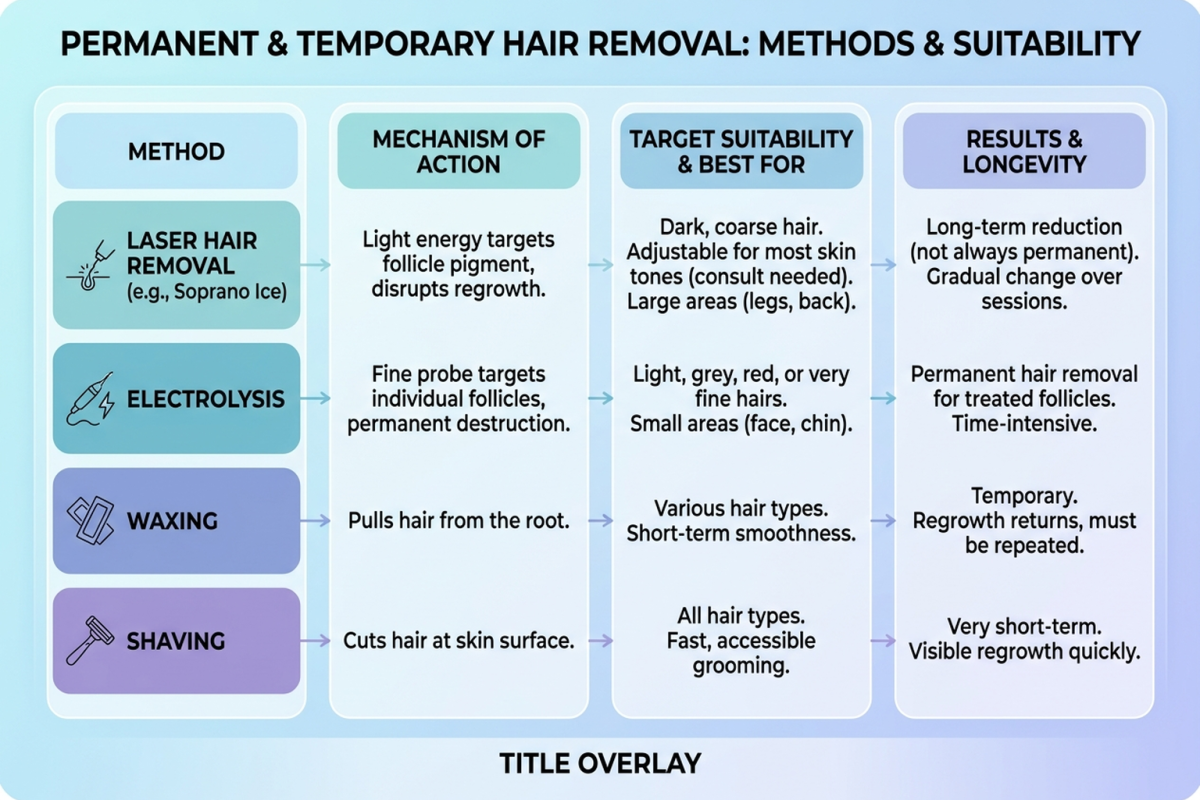
Tip 1: Compare Laser Hair Removal, Waxing, and Shaving Like Services in a Directory

When people compare dentists, they usually look beyond price. They consider comfort, technology, qualifications, location, reviews, appointment availability, and long-term value. The same mindset applies when comparing hair removal options.

Shaving

Shaving is fast and convenient, but it is also repetitive. Hair is cut at the surface, so regrowth can feel rough quickly. For areas such as the underarms, bikini line, legs, chest, back, or neck, frequent shaving can also contribute to friction, bumps, or irritation.

Waxing

Waxing removes hair from the root and may keep skin smoother longer than shaving. However, it requires enough regrowth between appointments and can cause tenderness or ingrown hairs for some people. Waxing also needs to stop before laser treatment because the laser requires the follicle target beneath the skin.

Laser Hair Removal

Laser hair removal is designed for progressive reduction over time. It requires planning, but it may suit people who want less ongoing maintenance, fewer shaving-related concerns, and a more structured approach before summer. If you are comparing clinics, Royal Laser and Skincare Clinic provides information about Laser Hair Removal for different treatment areas and care needs.

Tip 2: Stop Waxing, Plucking, and Threading Before Treatment

Laser hair removal works best when the hair root remains present under the skin. Waxing, tweezing, threading, and epilating remove that target, which can make treatment less effective. Shaving is different because it removes surface hair while leaving the follicle structure in place.

Before a session, the treatment area is usually shaved, clean, and free from heavy lotions, oils, deodorant, or self-tanner. Your provider should give area-specific instructions because the face, underarms, legs, bikini line, chest, and back may require slightly different preparation.

This is similar to following pre-appointment instructions from a dental provider. If a dentist asks you to avoid certain foods, bring X-rays, or follow medication guidance, those steps help the appointment go smoothly. Laser preparation works the same way: good preparation supports safer, more organized care.

Tip 3: Protect Your Skin From Sun Exposure

Sun exposure is one of the most important summer factors to discuss before laser hair removal. Recently tanned, sunburned, or irritated skin can be more reactive. A responsible provider should ask about recent sun exposure, self-tanner use, outdoor activities, and any skin sensitivity before treatment.

Sun protection does not only matter on beach days. Driving, patio dining, walking, gardening, outdoor workouts, and sports can expose areas such as the face, arms, legs, neck, shoulders, and chest. If you are planning laser hair removal before summer, build sun care into your schedule.

  • Before treatment: Avoid intentional tanning and tell your provider about recent sun exposure.
  • After treatment: Keep treated skin cool and avoid harsh exfoliation until advised.
  • During a treatment series: Maintain consistent sun habits so settings can be selected with safety in mind.

Tip 4: Look for Technology That Fits Your Skin Tone and Hair Type

Just as dental technology varies from office to office, laser hair removal technology can vary between clinics. Not every device feels the same, and not every platform is suitable for every skin profile. A proper consultation should review your skin tone, hair colour, treatment history, medication use, sun habits, and treatment goals before settings are chosen.

Royal Laser and Skincare Clinic uses Soprano Ice technology, which is described by the clinic as a comfort-focused option for a broad range of skin tones and hair types. People comparing providers may also want to ask whether the clinic treats sensitive areas, facial hair, full body areas, or Laser Hair Removal for Men.

For directory users, this is a key comparison point. A low price or quick appointment is not enough if the clinic does not clearly explain the device, comfort features, suitability, and aftercare expectations.

Tip 5: Compare Treatment Plans, Not Just Session Prices

Some clinics sell fixed bundles, while others base care on how the client responds. Hair density, body area, hormones, hair colour, skin tone, and treatment consistency can all affect the number of sessions someone may need. Before choosing a clinic, ask how progress is reviewed and what happens if additional sessions are needed.

Royal Laser and Skincare Clinic describes its care model as outcome-focused, with unlimited sessions until the desired outcome is achieved and lifetime free touch-ups under its clinic structure. If you are comparing Permanent Laser Hair Removal options, ask each provider to explain the difference between a package, a treatment plan, and future maintenance.

  • Session structure: Is treatment sold as a fixed bundle or adjusted to your response?
  • Touch-up policy: Are future touch-ups included or billed separately?
  • Technology: What laser system is used, and is it suitable for your skin tone?
  • Consultation: Does the first visit include a real skin and hair assessment?
  • Aftercare: Are shaving, exfoliation, product use, and sun exposure instructions clearly explained?

How This Fits a Dentists Directory Audience

A dentists directory helps people compare providers carefully instead of choosing blindly. That same comparison habit can help with non-dental cosmetic services. Many patients plan smile care and appearance-related treatments around the same life events: vacations, professional photos, weddings, graduations, interviews, and summer travel.

If you are already booking a dental cleaning, whitening consultation, aligner review, or cosmetic dentistry appointment, it may be a good time to map out other personal care appointments as well. The goal is not to mix dental care with laser treatment, but to plan your calendar realistically so your skin and smile are ready without rushing.

Questions to Ask Before Choosing a Laser Hair Removal Clinic

Before booking, ask practical questions the same way you would when choosing a dentist or specialist:

  • Which laser system do you use? The clinic should be able to explain the technology and comfort features.
  • Who performs the treatment? Ask about training, hygiene, and how settings are selected.
  • How do you assess skin tone and hair type? A consultation should happen before treatment begins.
  • What should I avoid before and after treatment? Expect guidance on sun exposure, shaving, waxing, exfoliation, and product use.
  • What if I need more sessions? Understand the clinic’s policy before committing.

What to Expect at a First Laser Hair Removal Visit

A first visit should include a review of your treatment area, hair growth, skin tone, recent sun exposure, medication history, previous hair removal habits, and comfort concerns. If treatment is appropriate, the area is usually cleaned, and the device is applied in a controlled pattern.

With Soprano Ice, integrated cooling is used to support comfort during treatment. Some clients may notice mild warmth or redness afterward, so aftercare instructions are important. Your provider should explain when to shave, when to avoid exfoliation, how to protect from sun exposure, and whether to delay workouts, deodorant, or certain skin products depending on the area treated.

Summer Laser Hair Removal Checklist

  • Start several weeks or months before major summer plans when possible.
  • Stop waxing, tweezing, threading, and epilating before treatment.
  • Shave as instructed before your appointment.
  • Avoid tanning and disclose recent sun exposure.
  • Ask which laser technology is used and whether it suits your skin tone.
  • Compare treatment policies, not only advertised prices.
  • Follow aftercare instructions carefully between appointments.

Plan Ahead for Smoother Summer Scheduling

Laser hair removal before summer works best when it is planned, not rushed. Start early if possible, protect your skin from sun exposure, stop waxing before treatment, choose technology suited to your skin and hair profile, and compare clinic policies before committing.

For questions about treatment areas, timing, comfort, or preparation, Royal Laser and Skincare Clinic can be contacted at 905-237-3242 or [email protected].

Ready to compare your summer treatment options?

Book a consultation and ask about timing, skin suitability, treatment areas, and aftercare before summer plans begin.

Book a Free Consultation

FAQs About Laser Hair Removal Before Summer

How early should I start laser hair removal before summer?

Starting several weeks or months before summer gives more room for proper session spacing. Because hair grows in cycles, multiple visits are usually needed before reduction is more noticeable across the full area.

Can I wax before a laser hair removal appointment?

Waxing, plucking, threading, and epilating should usually stop before laser hair removal because they remove the follicle target beneath the skin. Shaving is generally preferred because it clears surface hair while leaving the root structure available for treatment.

Can I get laser hair removal if I have a tan?

Recent tanning can make skin more reactive. A provider should assess the area first and may recommend waiting until the skin has settled. Avoid intentional tanning and disclose self-tanner use before treatment.

Is laser hair removal more comfortable than waxing?

Many clients find laser treatment with cooling technology more comfortable than waxing, but sensation varies by area, hair density, and individual sensitivity. Ask the clinic what comfort features are used before booking.

Will I still need to shave after my first laser session?

You may still need to shave between early sessions because laser hair removal reduces hair progressively. The first appointment begins the process rather than completing the full result.

Categories
Uncategorized

Benefits of Hiring a Certified Google Partner Agency in Toronto

For dental clinics in Toronto, being visible online is essential when patients are searching for services such as emergency dentistry, teeth cleaning, dental implants, orthodontics, or family dental care. A dentists directory can help patients compare local practices, but many clinics also need stronger visibility on Google Search to attract new patient inquiries at the right moment. This is where hiring a certified Google Partner agency in Toronto can become a practical advantage for dental practices that want more structured, compliant, and measurable digital advertising.

Certified Google Partner agencies bring specialized knowledge of Google Ads, campaign tracking, keyword strategy, and local search behaviour. For a broader explanation of the business advantages, this guide on the benefits of hiring a certified Google Partner agency in Toronto outlines why certification matters for companies competing in the Greater Toronto Area.

Why Google Partner Certification Matters for Dental Clinics

A Google Partner agency has met Google’s requirements for certification, platform knowledge, and account management standards. For dental practices, this matters because advertising for healthcare-related services needs careful keyword selection, compliant ad copy, accurate location targeting, and clear conversion tracking.

Unlike general advertising support, a certified Google Partner is expected to stay current with Google Ads best practices, campaign policy requirements, and performance optimization methods. This can help dental offices avoid common problems such as irrelevant clicks, poorly structured campaigns, weak landing page alignment, or unclear reporting.

Dental clinics interested in paid search can review Zigma Internet Marketing’s Google Ads Management services to understand how PPC campaigns may be structured for local lead generation.

How Certified Google Ads Support Can Help Dental Practices in Toronto

Toronto is a competitive market for dental care. Patients often search by location, treatment type, availability, insurance-related terms, and urgency. A certified Google Partner agency can help dental clinics build campaigns around these real search behaviours rather than relying on broad or generic advertising.

  • Local patient targeting: Campaigns can be structured around neighbourhoods, service areas, and proximity-based searches relevant to Toronto dental patients.
  • Service-specific campaigns: Dental clinics can separate campaigns for general dentistry, cosmetic dentistry, emergency dental care, orthodontics, implants, or hygiene appointments.
  • Better budget control: Paid search campaigns can be monitored and adjusted based on keyword performance, search intent, and conversion activity.
  • Policy-aware advertising: Google Ads for healthcare and dental services require careful wording and compliance with advertising policies.
  • Clearer reporting: A properly managed campaign should connect clicks, calls, form submissions, and appointment inquiries to measurable campaign activity.

Where a Dentists Directory Fits Into the Marketing Strategy

A dentists directory helps patients discover local dental offices, compare services, and find contact information. However, directory visibility and Google Ads serve different purposes. A directory supports discovery and credibility, while PPC helps clinics appear when patients are actively searching on Google for specific dental services.

For example, a dental practice listed in a directory may already benefit from a structured profile, service descriptions, and local relevance. A Google Ads campaign can then support that visibility by driving targeted traffic to the clinic’s website, appointment page, or contact form. When both channels are aligned, patients can find the practice through multiple trusted search paths.

Why Local Toronto Knowledge Is Important

Toronto’s dental market is shaped by neighbourhood density, commuting patterns, cultural diversity, and local competition. A campaign for a dental clinic in North York may require a different keyword and location strategy than one in downtown Toronto, Scarborough, Etobicoke, or the Financial District.

A certified Google Partner agency familiar with Toronto and the GTA can help refine targeting based on practical local factors, including neighbourhood search patterns, mobile search behaviour, and service-area competition. This local understanding is especially useful for dental clinics that want to attract patients near their physical location rather than paying for clicks from users outside their practical service area.

SEO and PPC for Dental Clinics: How They Work Together

Google Ads can generate immediate visibility for dental services, while SEO helps build long-term organic presence. For dental practices, both channels can be valuable. PPC is useful for specific services, new patient campaigns, emergency appointment searches, or competitive keywords. SEO helps strengthen the clinic’s website, service pages, local relevance, and organic rankings over time.

Dental clinics that want sustainable visibility should consider both paid and organic search strategies. Zigma Internet Marketing also provides SEO Services that may support local search visibility, technical website improvements, and content development.

What to Look for in a Google Partner Agency for a Dental Practice

Choosing an agency should involve more than checking for a certification badge. Dental practices should look for a partner that understands local service businesses, appointment-based lead generation, conversion tracking, and the importance of accurate reporting.

  • Google Partner certification: Confirms that the agency has met Google’s standards for platform knowledge and account management.
  • Local campaign experience: Important for targeting Toronto neighbourhoods and nearby patient searches.
  • Transparent reporting: Clinics should understand where their advertising budget is going and what actions patients are taking.
  • Landing page awareness: Ads should connect to relevant pages for dental services, appointment requests, or contact options.
  • Integrated marketing support: PPC often works best when supported by SEO, website improvements, content, and analytics.

Clinics exploring broader online marketing support can review available Digital Marketing Services to see how paid ads, SEO, content, and website strategy can work together.

Common Questions From Dental Clinics

Does a dental clinic need Google Ads if it is already listed in a dentists directory?

A directory listing can support patient discovery, but Google Ads can provide additional visibility when patients are actively searching for specific dental services in Toronto.

Is Google Partner certification a guarantee of new patients?

No certification can guarantee results. However, it indicates that the agency has demonstrated knowledge of Google Ads and follows platform standards that can support better campaign management.

Can PPC help emergency dental services?

PPC can be useful for time-sensitive searches, provided the campaign is properly targeted, the ad copy is compliant, and the landing page clearly explains how patients can contact the clinic.

Should dental clinics use SEO or PPC first?

It depends on the clinic’s goals. PPC can support immediate visibility, while SEO builds long-term organic presence. Many practices benefit from using both together.

How can a clinic verify Google Partner status?

Dental practices can ask the agency for proof of certification or check Google’s official Partner resources where applicable.

Final Thoughts for Toronto Dental Practices

For dental clinics competing in Toronto, online visibility requires more than a basic website. A dentists directory listing, local SEO, and well-managed Google Ads can each play a role in helping patients find the right practice. Hiring a certified Google Partner agency can provide structured campaign management, policy-aware advertising, and clearer performance tracking for clinics that want to invest in paid search.

Dental practices that want to discuss their digital marketing options can Book a Free Strategy Call with Zigma Internet Marketing.

Categories
Uncategorized

Online Marketing Business Strategies for Dental Practices in a Dentists Directory

For dental clinics, being listed in a dentists directory is only the starting point. Patients still need to find the practice, understand the services offered, trust the clinic, and take the next step by calling, booking, or submitting an enquiry. An online marketing business helps dental practices connect those steps through search visibility, directory optimization, website improvements, paid ads, content, tracking, and reporting.

The broader principles behind an online marketing business for smarter growth apply especially well to dentists because patient acquisition depends on measurable actions such as phone calls, appointment requests, contact forms, and local search engagement.

For a dental practice owner or clinic manager, the challenge is not simply whether digital marketing matters. The real question is what should be improved first: the directory profile, local SEO, Google Ads, service pages, website speed, patient reviews, or conversion tracking. A practical strategy keeps those decisions connected to evidence instead of assumptions.

Zigma Internet Marketing supports this kind of planning through Digital Marketing Services that connect strategy, execution, reporting, and ongoing refinement.

Why dentists directories need more than a basic listing

A dentists directory can help patients compare local practices, services, locations, and contact options. However, a listing that only includes a clinic name, address, and phone number may not be enough to turn a visitor into a patient enquiry.

Effective dental directory visibility depends on clarity. Patients may want to know whether a clinic offers emergency dentistry, family dentistry, cosmetic dentistry, dental implants, teeth whitening, orthodontics, sedation options, or preventive care. They also need simple contact paths, accurate location details, and a consistent message between the directory profile and the clinic’s website.

This is where online marketing becomes practical. It helps connect the directory listing to the wider patient journey: local search discovery, profile clicks, website visits, service-page reading, trust-building, and appointment booking.

Where online marketing for dental practices usually starts

Dental marketing should begin with diagnosis. Before a clinic invests more budget, it is useful to check whether patients can find the practice, whether service pages match patient search intent, whether the directory profile is complete, and whether the website makes booking simple.

Common issues are often simple but costly. A clinic may receive traffic from a directory, but the website may hide the phone number on mobile. A practice may publish dental articles, but not have strong pages for high-intent services. A Google Ads campaign may attract clicks, but send patients to a generic homepage instead of a relevant treatment page.

For practices building long-term visibility, SEO Services can help identify technical barriers, local search gaps, content issues, and search-intent mismatches that limit organic performance.

Comparing digital growth channels for dentists

Different channels support different patient acquisition goals. A dental clinic may need local SEO for long-term visibility, paid search for immediate demand, directory optimization for comparison traffic, and website improvements to convert more visitors into enquiries.

Channel Best use for dental practices Common constraint What to measure
Local SEO Improving visibility for dental services, location-based searches, and treatment-related queries over time. Local SEO often requires technical fixes, relevant service pages, consistent information, and ongoing content improvements. Organic calls, appointment requests, local rankings, service-page visits, and conversions.
Dentists directory listing Helping patients compare clinics, review services, and move from discovery to contact. An incomplete or unclear listing may receive views without producing useful enquiries. Profile views, website clicks, phone clicks, form submissions, and appointment enquiries.
Google Ads Capturing high-intent searches such as emergency dental care, dental implants, or teeth whitening. Poor keyword targeting, weak landing pages, and missing conversion tracking can waste budget quickly. Cost per lead, conversion rate, search terms, call quality, and appointment enquiries.
Dental content Answering patient questions, supporting SEO, and helping patients understand treatments before contacting the clinic. Content that is too broad may attract readers who are not ready to book or are outside the service area. Organic entrances, engagement, assisted conversions, keyword coverage, and service-page support.
Website conversion optimization Improving booking forms, mobile usability, phone visibility, trust cues, page speed, and calls to action. Conversion improvements need clean tracking to show whether changes are helping. Call clicks, form completions, appointment requests, page engagement, and lead quality.

How a directory profile fits into the patient journey

A dentists directory profile should not operate separately from the clinic’s website and marketing campaigns. It should support the same message patients see in search results, ads, service pages, and appointment forms.

For example, a patient searching for emergency dental care may first find a directory profile. From there, they may click to the clinic’s website, check service availability, look for contact details, and decide whether to call. If the profile is clear but the website is slow or confusing, the clinic may lose the enquiry. If the website is strong but the directory listing is incomplete, the patient may never click through.

Website quality sits at the centre of this system. For dental clinics rebuilding or improving a site, Website Design & Development should account for mobile usability, page speed, service structure, tracking, content hierarchy, and appointment paths from the beginning.

Five practical steps before increasing dental marketing spend

Step 1: Confirm conversion tracking

Tracking should capture phone clicks, contact form submissions, appointment requests, and other actions that show patient interest. Without clean tracking, a clinic may see traffic growth without knowing whether it produced useful enquiries.

Outcome: Better visibility into which channels generate real patient contact.

Watch for: Missing call tracking, duplicate form events, untagged appointment buttons, and analytics events that trigger before a patient completes an action.

Step 2: Review the directory listing

A dental directory profile should clearly describe the clinic’s services, location, contact options, and patient-relevant details. It should also align with the clinic’s website so patients receive a consistent experience.

Outcome: A stronger bridge between directory discovery and patient enquiry.

Watch for: Outdated contact details, missing service categories, vague descriptions, broken website links, and inconsistent clinic information.

Step 3: Match service pages to patient intent

Patients searching for dental implants, Invisalign, emergency dentistry, or family dental care have different questions. Each service page should answer the likely concern clearly and guide the visitor toward booking or contacting the clinic.

Outcome: Content that supports both search visibility and patient decision-making.

Watch for: Generic service pages, thin content, unclear treatment descriptions, and pages that fail to explain the next step.

Step 4: Check landing page friction

Whether a patient arrives from a directory, Google search, or paid ad, the landing page should make the next action obvious. Phone numbers, appointment forms, location details, and service information should be easy to find, especially on mobile devices.

Outcome: More value from existing traffic before spending more on campaigns.

Watch for: Slow load times, hidden contact details, long forms, unclear headings, weak trust signals, and pages that do not match the patient’s search.

Step 5: Separate lead volume from patient fit

More enquiries do not automatically mean better growth. A campaign may generate calls from people outside the clinic’s area or from patients looking for services the practice does not offer. Marketing should be reviewed against enquiry quality, not just volume.

Outcome: Smarter budget decisions based on patient relevance.

Watch for: Unqualified calls, spam forms, duplicate leads, low-intent search terms, and campaigns that look efficient before front-desk feedback is included.

SEO versus PPC for dental clinics

SEO and PPC solve different timing problems for dental practices. SEO is useful for building durable visibility around services, locations, and patient questions. PPC is useful when a clinic wants faster feedback from people actively searching for specific dental services.

A clinic might use paid search to test demand for emergency dentistry or cosmetic services, while using SEO to build long-term authority around family dentistry, preventive care, or treatment education. Most dental growth plans eventually use both, but the balance depends on urgency, budget, competition, website quality, and appointment capacity.

For paid search programs, Google Ads Management should include search query review, negative keywords, landing page alignment, conversion tracking, and efficiency checks rather than campaign setup alone.

What affects return from dental digital marketing

Return from dental marketing is shaped by more than channel selection. A strong campaign can underperform if the website is unclear, the directory listing is incomplete, tracking is broken, or the clinic does not follow up with enquiries quickly.

Several factors deserve close attention:

  • Message match: Directory descriptions, ads, search snippets, landing pages, and phone conversations should describe services consistently.
  • Local relevance: Patients usually search by location, so service-area clarity and accurate clinic information matter.
  • Conversion path clarity: Visitors need a simple next step, such as calling, requesting an appointment, or submitting a form.
  • Traffic quality: Search terms, directory categories, service pages, and audience filters influence whether visitors are likely to become patients.
  • Follow-up feedback: Marketing data becomes more useful when the clinic knows which enquiries turned into appointments.

Common mistakes that weaken dental marketing performance

Dental marketing often becomes less effective when small issues stack up. A directory listing may be incomplete, SEO may target the wrong terms, ads may send traffic to generic pages, and reports may focus on clicks without explaining patient enquiries.

  • Starting with channels instead of goals: Choosing SEO, PPC, or social media before defining the desired patient action can create unfocused activity.
  • Ignoring the directory profile: A weak profile may reduce trust before a patient ever reaches the clinic’s website.
  • Publishing content without search purpose: Dental content should answer real patient questions or support service visibility.
  • Sending paid traffic to generic pages: Ads usually work better when the landing page reflects the exact service the patient searched for.
  • Reviewing only traffic numbers: Reports should connect traffic, calls, forms, appointment requests, and lead quality.

How to judge a digital marketing partner for a dental practice

A good marketing partner should explain trade-offs clearly. For a dental clinic, that means identifying which items should be fixed first, which channels need more time, where budget may be wasted, and which metrics show real patient interest.

Useful questions include: Which conversions will be tracked? How will phone calls and appointment requests be measured? Are service pages aligned with patient search intent? Does the directory listing support the website? Which landing pages need improvement before ads scale? How often will campaigns be reviewed?

Look for practical evidence rather than polished promises. Clear reporting, analytics setup, conversion tracking, and experience across SEO, PPC, web development, content, and social media create a stronger foundation for accountable marketing.

FAQs about online marketing for dentists

These answers address common questions dental practices may ask before investing more time or budget into online growth.

How can a dentists directory help a dental practice?

A dentists directory can help patients discover and compare local clinics. Its value increases when the listing is complete, accurate, connected to strong service pages, and supported by clear contact options.

Should a dental clinic start with SEO or Google Ads?

It depends on the clinic’s immediate goal. Google Ads can help test demand faster for specific services, while SEO can build long-term visibility for local and treatment-related searches. Many clinics use both, but not always with equal priority at the same time.

What should dental practices track online?

Dental practices should track phone clicks, contact forms, appointment requests, service-page conversions, directory clicks, and lead quality. Clicks and impressions are useful, but they do not show the full picture without conversion data.

Does a dental website need to be rebuilt before running ads?

A full rebuild is not always required, but the landing experience should be reviewed first. Mobile usability, page speed, clear service information, visible phone numbers, appointment forms, and tracking can strongly affect whether ad traffic becomes patient enquiries.

How often should dental marketing campaigns be reviewed?

Paid search campaigns may need frequent checks to control irrelevant searches and budget waste. SEO and directory performance are often reviewed through monthly analysis of visibility, traffic, enquiries, and service-page performance.

A clearer path from directory visibility to patient enquiries

An online marketing business should help dental practices reduce uncertainty. The work should clarify how patients find the clinic, which listings and pages help them act, and which campaigns create enquiries worth repeating.

For dentists, smarter growth is not simply more website traffic or a longer directory description. It is a connected system of local visibility, directory optimization, service-page clarity, paid media, tracking, reporting, and conversion improvement.

Zigma Internet Marketing brings Google Partner-certified expertise, full-service execution, and transparent reporting across SEO, PPC, web, content, analytics, and social media. If you want a practical review of where your digital marketing is helping or leaking value, 📩 Ask an SEO/PPC question.

Related topics

Categories
Uncategorized

Digital marketing agency near me for smarter growth choices

For dental practices, a digital marketing agency near me search is often the first step toward improving appointment requests, local search visibility, website conversions, and patient acquisition. But choosing a marketing partner for a dental clinic requires more than checking who appears closest on a map. The right agency should understand how patients search for dentists, how local listings and directory profiles influence trust, and how to connect online activity to real consultation requests.

If you are comparing agencies, it helps to start with a structured evaluation process rather than relying only on location or sales promises. This guide reframes the key ideas from Digital marketing agency near me for smarter growth choices for dental clinics, dental groups, and practice managers who want better decisions from SEO, PPC, websites, content, analytics, and directory visibility.

Why dental practices search for a digital marketing agency near me

Dentistry is highly local. Patients often search for terms such as “dentist near me,” “emergency dentist,” “family dentist,” “dental implants,” or “Invisalign provider” before choosing a clinic. That makes local SEO, paid search, patient reviews, Google Business Profile optimization, website usability, and dental directory presence important parts of a complete growth strategy.

A nearby agency may understand your market, but proximity should not be the only deciding factor. A dental marketing partner should be able to explain how patients move from search results to directory listings, from listings to your website, and from your website to phone calls or appointment forms. If that path is not tracked properly, a clinic may spend money on campaigns without knowing which channels actually bring qualified patient inquiries.

A practical agency review for a dental office should include:

  • Local search understanding: The agency should know how location pages, dental service pages, map results, reviews, and directory citations work together.
  • Patient-intent targeting: Campaigns should distinguish between general research searches and high-intent searches for appointments, emergencies, or specific treatments.
  • Tracking setup: Phone calls, appointment requests, contact forms, online booking actions, and direction clicks should be measured where possible.
  • Website conversion quality: Dental pages should make it easy for visitors to understand services, insurance or financing information, office location, hours, and next steps.
  • Reporting clarity: Reports should connect marketing activity to patient inquiries, not only impressions, clicks, or traffic growth.

How a dentists directory fits into digital marketing

A dentists directory can support both visibility and trust. Patients often use directories to compare nearby dentists, check service categories, review practice information, and decide which clinics appear credible. For dental practices, a directory listing can also support local search consistency when the practice name, address, phone number, website, and service details match other online profiles.

However, a directory profile should not be treated as a replacement for a complete marketing system. A strong dental marketing plan connects directory visibility with your website, Google Business Profile, search engine optimization, paid search, and review strategy. Each part should help patients move closer to booking an appointment.

For example, a patient might first find a clinic through a directory, then visit the practice website, then compare treatment pages, then call the office. If the directory listing is incomplete, the website is slow, or calls are not tracked, the practice may miss useful information about what is driving new patient interest.

What a dental-focused digital marketing agency should handle

A capable agency should manage more than isolated ads or occasional blog posts. For dentists, the strongest marketing work usually includes local SEO, technical SEO, service-page content, paid search, landing pages, conversion tracking, website improvements, review support, analytics, and reporting.

SEO Services can help dental practices improve visibility for treatment-related and location-based searches. Strong SEO work may include technical cleanup, internal linking, page speed review, structured data, local content planning, service page improvements, and ongoing performance analysis.

Google Ads Management can be useful when a dental clinic wants faster visibility for competitive searches such as emergency dentistry, implants, cosmetic dentistry, orthodontics, or new patient appointments. Good PPC management should include search term review, negative keywords, conversion tracking, ad testing, audience refinement, and landing page feedback.

Website Design & Development also matters because dental patients need clear information before they contact a clinic. A practice website should be mobile-friendly, fast, easy to navigate, accessible, and structured around common patient questions. Service pages should explain treatment options, location details, appointment steps, and ways to contact the office.

How to choose the right marketing agency for a dental practice

Choosing a marketing agency for a dental clinic should feel like selecting an operating partner, not buying a generic advertising package. The agency should ask about your services, treatment priorities, patient capacity, scheduling process, service area, competition, insurance or financing information, and current website performance before recommending a plan.

A strong agency should also explain trade-offs clearly. SEO may support long-term visibility for services and locations, but it requires quality content, technical improvements, and consistency. PPC may produce faster testing opportunities, but weak landing pages or broad targeting can waste budget. Directory listings can help local discovery, but they work best when connected to accurate profiles, strong website pages, and a clear appointment path.

Questions to ask before hiring

  • How will success be measured? Look for answers tied to appointment requests, qualified calls, form submissions, cost per lead, or booked consultations.
  • How will local SEO be handled? Ask about Google Business Profile, directory consistency, location pages, service pages, reviews, and technical SEO.
  • What happens in the first month? A serious agency often reviews analytics, website structure, tracking, local listings, ad accounts, and priority service pages before scaling spend.
  • Who performs the work? Ask whether SEO, ad management, copywriting, development, and reporting are handled by specialists or disconnected vendors.
  • What will reports show? Useful reports should explain what changed, why it changed, what results followed, and what the agency recommends next.

What affects ROI for dental marketing campaigns

Marketing ROI for dentists is shaped by more than ad spend or keyword rankings. Results can be affected by call handling, appointment availability, tracking accuracy, website clarity, review quality, service mix, competition, and how well campaign targeting matches patient intent.

For example, a campaign may generate clicks for “dental implants,” but if the landing page does not explain the consultation process, financing considerations, treatment stages, or how to schedule an appointment, many visitors may leave without contacting the clinic. Similarly, if phone calls are not tracked, the campaign may appear weaker than it actually is.

Signals that often influence results

  • Conversion tracking: Forms, calls, appointment buttons, booking tools, and important website actions should be measured before major campaign decisions are made.
  • Search intent match: Pages should match what patients are looking for, whether they need emergency care, a family dentist, cosmetic treatment, or a second opinion.
  • Landing page quality: Dental pages should answer common questions, reduce uncertainty, show location details, and make contact options easy to find.
  • Budget control: PPC campaigns need regular search query review, negative keywords, and budget decisions based on real inquiry quality.
  • Office feedback: Marketing teams should know which inquiries became real appointments and which leads were unqualified or outside the service area.

SEO vs PPC for dentists: when to use each

SEO and PPC can both help dental practices, but they solve different timing problems. SEO is useful for building long-term visibility across service and location searches. PPC can help a clinic test keywords, promote priority services, or gain immediate exposure while organic pages improve.

The two channels often work best together. PPC data can show which searches generate qualified inquiries before the practice invests heavily in SEO content. SEO pages can support better landing page experiences and reduce dependence on paid traffic over time. Analytics can also show whether patients first discover the clinic through ads, directories, organic search, or direct visits.

A practical comparison for dental clinics

  • Use SEO when: You want durable visibility for core services, locations, and patient education topics.
  • Use PPC when: You need faster visibility for urgent, competitive, or high-priority services.
  • Use both when: Your market is competitive and your practice needs short-term inquiry generation while building long-term search strength.

How dental practices can compete online without overspending

Dental clinics do not need to market every service equally at once. A focused strategy often starts with the services and locations most likely to produce qualified patient inquiries. That may mean improving a few high-value service pages, strengthening local profiles, refining PPC targeting, and making appointment paths clearer before expanding campaigns.

Content quality also matters. Thin or duplicated dental pages may not help patients make decisions. Stronger pages answer real questions, explain the treatment process, provide location-specific details, and guide visitors toward calling or booking.

Practical ways to focus your marketing

  • Improve priority service pages: Build useful pages for treatments that patients actively search for and that your practice wants to grow.
  • Keep directory information accurate: Practice name, address, phone number, website, hours, and service categories should be consistent.
  • Fix tracking before scaling: Better data helps prevent poor budget decisions and shows which channels produce useful inquiries.
  • Simplify conversion paths: Make phone numbers, appointment buttons, forms, office hours, and location details easy to find.
  • Review reports with context: Rankings and clicks matter only when they support qualified patient demand.

Trust signals to check before hiring an agency

Trust should be visible in how an agency communicates. Look for clear explanations, realistic expectations, transparent reporting, and a willingness to discuss both opportunities and limitations. A dental marketing agency should be able to explain how local SEO, paid search, websites, analytics, and directory visibility work together.

If your practice wants a second opinion on SEO, PPC, website performance, or tracking setup, you can ask a focused question and get direction on what to review first.

Ask an SEO/PPC question

FAQs About Digital Marketing Agencies for Dentists

How should a dental clinic compare agencies from a digital marketing agency near me search?

Compare agencies by reviewing their local SEO process, tracking setup, reporting quality, dental website experience, PPC management approach, and ability to connect campaigns to patient inquiries.

Do dentists need SEO, PPC, or both?

SEO is useful for long-term visibility across services and locations. PPC is useful for faster testing and immediate search exposure. Many dental practices use both when they need short-term inquiries while building organic visibility.

Why do directory listings matter for dental practices?

Directory listings can help patients discover and compare dentists. They also support local consistency when practice details match across the web, including name, address, phone number, website, hours, and service categories.

What should dental marketing reports include?

Reports should show more than traffic and clicks. Useful reporting connects campaign work to calls, forms, appointment requests, local visibility, service-page performance, and lead quality feedback.

What are warning signs when choosing a dental marketing agency?

Be cautious if an agency guarantees rankings, avoids discussing tracking, cannot explain how campaigns affect patient inquiries, or reports only impressions without meaningful business context.

Related Topics:

Categories
Uncategorized

Digital marketing near me can be easier to choose

Digital marketing near me for dental practices starts with patient goals

When a dental clinic searches for “digital marketing near me,” the goal is usually not just to find an agency in the same city. The real goal is to find support that can help the practice appear in relevant searches, attract patients who need the right services, improve appointment enquiries, and make marketing performance easier to understand.

For dentists listed in a directory, online visibility works across several touchpoints: directory profiles, local search results, service pages, reviews, ads, and the clinic website. A broader guide to choosing digital marketing near me explains why clear goals, tracking, and practical reporting should come before buying a generic marketing package.

Dental marketing should connect visibility to real patient actions. That may include calls, appointment request forms, emergency dentistry enquiries, cosmetic consultation requests, hygiene bookings, or new-patient exam interest. The right marketing partner should be able to explain how search engine optimization, paid ads, website design, content, analytics, and conversion improvements work together for a dental office.

Why dental clinics need a different approach to digital marketing

Dentistry is a local, trust-based service. Patients often compare clinics by location, availability, services, reviews, insurance or payment information, website clarity, and how easy it is to book or call. That means dental digital marketing cannot focus on traffic alone. It must help the right patient understand whether the clinic is a good fit.

A dental office may need visibility for general dentistry, emergency dentistry, dental implants, Invisalign, teeth whitening, family dentistry, children’s dentistry, root canals, or dentures. Each service can involve different patient intent. Someone searching for emergency dental care may need immediate contact options, while someone researching implants may need educational content and a consultation path.

Agencies such as Zigma Internet Marketing offer Digital Marketing Services that can support SEO, PPC, web design, content, analytics, social media, and conversion rate improvement. For dental practices, the important question is whether those services are shaped around patient intent, local competition, and measurable appointment opportunities.

How digital marketing turns dental searches into appointment enquiries

Digital marketing for dentists is the organized use of online channels to help patients find, evaluate, and contact a dental clinic. A complete plan may include organic search, paid search, local optimization, website improvements, content, landing pages, analytics, call tracking, and directory profile optimization.

SEO Services can help a dental website appear for relevant searches without relying only on ads. Paid search can help capture high-intent demand from people actively looking for a dentist or a specific dental service. Website and conversion improvements can make it easier for visitors to call, submit a form, or request an appointment.

For dental clinics, measurement matters because not all enquiries have the same value or urgency. A report should help separate general website activity from meaningful patient actions, such as phone calls, appointment form submissions, service-specific enquiries, and repeat patterns from particular search terms or pages.

What a dental digital marketing plan should include

A strong plan should begin with the clinic’s services, location, patient capacity, competitive environment, website condition, and current lead sources. A solo dental office, a multi-location clinic, a specialist, and a family dentistry practice may all need different channel priorities.

  • Local search visibility: Dental SEO should consider location pages, service pages, technical site health, on-page structure, internal links, and content that matches patient intent.
  • Paid patient acquisition: PPC should include careful keyword selection, negative keywords, conversion tracking, ad testing, budget control, and landing pages aligned with the service being advertised.
  • Conversion paths: Patients should be able to quickly find contact details, appointment options, service information, location details, and reassurance signals.
  • Content strategy: Dental content should answer real patient questions about symptoms, treatments, costs, timelines, comfort, aftercare, and when to book a visit.
  • Reporting: Reports should connect traffic, rankings, ad spend, calls, forms, and appointment-related signals rather than focusing only on impressions or clicks.

The objective is not to run every possible campaign. The objective is to build a practical system where each channel has a defined purpose and every report helps the clinic make a better marketing decision.

Comparing SEO, PPC, CRO, content, and social media for dentists

Dental practices often ask whether SEO, PPC, content, or social media should come first. The answer depends on the clinic’s current visibility, website quality, appointment goals, and how quickly it needs to generate enquiries.

Channel Primary role for dentists Strong fit Common risk
SEO Build organic visibility for dental services and local searches. Clinics that want durable visibility for service and location-based queries. Publishing general dental articles without improving service pages or technical foundations.
PPC Capture high-intent searches through paid ads. Clinics that want faster testing for services such as emergency dentistry, implants, or Invisalign. Spending before tracking, landing pages, and keyword filtering are properly set up.
CRO Improve the percentage of visitors who call or request an appointment. Dental websites with traffic but weak appointment enquiries. Changing design without reviewing user behaviour, mobile experience, or form friction.
Content Answer patient questions and support service-page visibility. Clinics with treatments that require education, comparison, or trust-building. Writing generic posts that do not support patient decisions or service pages.
Social media Build awareness, maintain engagement, and support patient education. Practices with consistent updates, community involvement, or visual educational content. Posting regularly without a clear booking path or tracking plan.

For many dental clinics, the strongest strategy combines channels. SEO builds lasting search visibility, PPC tests demand faster, CRO improves appointment conversion, and analytics shows which efforts are creating useful patient enquiries.

How to choose a digital marketing agency for a dental clinic

Choosing an agency should feel less like buying a fixed package and more like selecting a growth partner. A useful agency should ask about the clinic’s services, appointment capacity, patient types, follow-up process, call handling, current website performance, and local competition.

Before committing, ask direct questions. Which conversions will be tracked? How will phone calls and forms be measured? How will the agency distinguish qualified patient enquiries from irrelevant contacts? How often will search terms, ads, landing pages, and website performance be reviewed?

Helpful evaluation signals include:

  • Audit quality: The agency should review technical SEO, content gaps, tracking setup, conversion paths, and ad account structure before recommending major changes.
  • Dental service understanding: Marketing for emergency dentistry is different from marketing cosmetic dentistry, implants, hygiene, or family care.
  • Reporting clarity: Reports should explain what changed, what the data suggests, and what action comes next.
  • Implementation ability: Strategy is limited if no one can improve pages, fix tracking, write content, adjust campaigns, or improve user experience.
  • Communication rhythm: Regular reviews help keep marketing aligned with appointment capacity, seasonal demand, and clinic priorities.

What affects ROI in dental digital marketing

Return on investment is influenced by more than ad spend or search rankings. For dental clinics, performance can be affected by search intent, service profitability, appointment availability, call response time, website clarity, landing page quality, reviews, tracking accuracy, and how well the clinic follows up with enquiries.

A paid search campaign may generate calls but still underperform if ads attract patients outside the clinic’s service area or if the landing page does not clearly explain the treatment. An SEO campaign may increase traffic but produce limited commercial value if most visits come from broad informational queries with little appointment intent.

Useful reporting should connect marketing activity to practical clinic signals:

  • Lead source: Which page, campaign, keyword, or channel influenced the patient enquiry?
  • Lead quality: Did the enquiry match the clinic’s services, location, urgency, and appointment availability?
  • Conversion rate: Which pages turn visitors into calls or appointment requests?
  • Acquisition efficiency: Which campaigns produce stronger outcomes relative to spend and effort?
  • Operational feedback: Are calls being answered, forms followed up, and appointment requests handled quickly?

SEO vs PPC for dentists: when each strategy fits

SEO and PPC solve different timing problems for dental practices. SEO is useful for long-term visibility, service-page depth, technical site health, and sustained organic lead flow. PPC is useful for controlled testing, high-intent demand capture, and campaigns where speed and targeting precision matter.

Google Ads Management can help identify which search terms, ad messages, and landing pages produce better enquiries. Those insights can also support SEO planning by showing which services and patient concerns deserve stronger website content.

A practical comparison is simple: PPC can help a clinic test demand and visibility quickly, while SEO builds a more durable search presence over time. Neither channel can fully compensate for unclear service pages, poor mobile experience, weak tracking, or slow follow-up.

How dentists can compete online in local search

Dental practices often compete against other local clinics, large dental groups, directories, review platforms, and paid ads. A smaller clinic can still compete by being specific, useful, and consistent across its online presence.

Strong local competition usually requires focused pages and clear positioning. A clinic should make it easy for patients to understand what services are offered, where the office is located, how to contact the team, and what type of appointment to request.

Practical ways to compete include:

  • Build focused service pages: Each major service should have a clear page that matches patient search intent and guides visitors toward a call or appointment request.
  • Improve technical foundations: Slow pages, crawl errors, thin content, and poor mobile layouts can limit both SEO and paid campaign performance.
  • Use trust signals carefully: Reviews, treatment explanations, team information, office details, and patient resources can help visitors feel more confident.
  • Keep directory information consistent: Name, address, phone number, service categories, and website links should be accurate wherever the clinic appears.
  • Track the full path: Marketing reports should show which channels create useful patient conversations and where drop-offs occur.

A practical checklist before hiring dental marketing support

Before hiring a digital marketing agency, a dental practice should prepare a short internal snapshot. This helps the agency diagnose the situation accurately and helps the clinic compare recommendations fairly.

Step 1: Define the appointment outcome

Decide which outcome matters most, such as more new-patient exams, emergency calls, cosmetic consultations, implant enquiries, hygiene bookings, or better use of existing website traffic.

Check: Can the agency explain how each recommended activity connects to that outcome?

Step 2: Review current tracking

Check whether calls, forms, appointment buttons, contact page visits, and key service-page actions are tracked properly. Without accurate tracking, marketing decisions may be based on incomplete evidence.

Check: Ask whether GA4, Google Tag Manager, conversion events, and reporting dashboards will be reviewed before major campaign changes.

Step 3: Separate visibility problems from conversion problems

A clinic with low traffic may need stronger SEO or PPC visibility. A clinic with steady traffic but few enquiries may need clearer messaging, better calls to action, faster pages, or improved mobile usability.

Check: Ask whether the agency has reviewed search visibility, landing page behaviour, form friction, and phone-call paths.

Step 4: Ask for the first diagnostic priorities

A credible agency should be able to explain the first areas it would inspect before promising a full roadmap. Common priorities include tracking, website quality, keyword intent, service-page gaps, and ad account structure.

Check: Listen for reasoning that is specific to your clinic rather than a preset package.

Step 5: Agree on reporting that supports decisions

Reports should help the clinic understand what to do next. Rankings, clicks, impressions, and spend are useful only when connected to calls, forms, appointment intent, and service-level performance.

Check: Ask what action would be taken if a campaign produces traffic but weak enquiries.

Questions dentists should ask before choosing “digital marketing near me”

A final decision should include both marketing skill and operational fit. A dental clinic should look for a team that can explain SEO, PPC, website conversion, analytics, and reporting in plain language while understanding how patients move from search to appointment.

If your clinic wants a second opinion on SEO, PPC, tracking, or website conversion, Zigma Internet Marketing can be reached at (647) 556-6071 or [email protected]. For a structured conversation, use Ask an SEO or PPC question.

FAQs about digital marketing near me for dentists

How should a dental clinic compare agencies that appear for digital marketing near me?

Compare agencies by how clearly they diagnose your clinic’s current situation. Ask about tracking, local SEO, service-page structure, call and form tracking, PPC search terms, conversion paths, and reporting. A useful agency should explain the first priorities before recommending a full campaign plan.

Which digital marketing services should dentists ask about first?

Start with the areas that affect patient enquiries most directly: tracking accuracy, website conversion, local SEO visibility, and paid search efficiency. If the website already receives traffic, conversion improvements may come before more ad spend. If visibility is weak, SEO and PPC may need attention first.

Do dentists need SEO, PPC, or both?

SEO supports long-term organic visibility for services and local searches. PPC supports faster testing and controlled demand capture. Many dental practices use both because paid campaigns can reveal keyword and messaging insights, while SEO builds durable visibility over time.

What should a dental marketing dashboard show?

A useful dashboard should show more than clicks and impressions. It should connect traffic sources, calls, forms, service pages, campaign spend, search terms, landing pages, and lead quality signals so the clinic can make practical decisions.

Why is a dentist directory relevant to digital marketing?

A dentist directory can be part of a patient’s discovery process. Accurate profiles, consistent contact details, clear service categories, and links to useful clinic pages can support visibility and help patients compare local dental options more easily.

Related Topics:

Categories
Uncategorized

Marketing Strategy for Dental Practices: Connecting Directory Visibility to Patient Growth

A marketing strategy for a dental practice is the plan that connects patient needs, treatment focus, local search visibility, directory listings, website pages, advertising, budget, and measurement into one practical system. For dentists, the goal is not simply to appear online more often; it is to help the right patients find the right provider and take a clear next step, such as calling, booking, or requesting more information.

This dentists directory perspective builds on the broader idea of a marketing strategy that connects goals to growth: every marketing activity should support a specific business outcome. For a dental clinic, that outcome may be more new patient inquiries, better visibility for specific services, improved appointment quality, or stronger retention from existing patients.

A dentists directory can play an important role in that strategy because it gives patients a structured way to compare providers by location, services, availability, and practice details. However, directory visibility works best when it is connected to the rest of the clinic’s marketing system, including local SEO, website content, paid search, conversion tracking, and patient-friendly messaging.

Why dental marketing strategy should start with patient intent

A useful dental marketing strategy starts with a clear target, not a channel preference. “Get more traffic” is too broad because website visits or directory views do not automatically become appointments. A stronger target might be more consultation requests for a priority treatment, more calls from nearby patients, or better appointment requests from people searching for family dentistry, emergency dental care, cosmetic dentistry, orthodontics, dental implants, or preventive care.

Patient intent should guide the plan. Someone searching for an emergency dentist may need fast contact options and clear location information. Someone researching veneers, implants, or Invisalign may need educational content, treatment explanations, and confidence-building details before booking. Someone looking for a family dentist may compare convenience, accepted patients, services, and practice atmosphere.

When a dental practice understands patient intent, the directory profile, website pages, ads, and content can all support the same path. The result is a more coherent experience for the patient and a more measurable system for the practice.

How a dentists directory fits into a complete marketing strategy

A directory listing is not just an online business card. For patients, it can be a discovery and comparison tool. For dental practices, it can support visibility, credibility, and local patient acquisition when the profile is accurate, complete, and aligned with the clinic’s website and other marketing channels.

Important directory profile elements may include the practice name, location, phone number, service categories, practice description, hours, appointment options, and links to relevant pages. These details help patients decide whether the clinic matches their needs before they call or click.

The directory should also fit into a broader channel plan. If a clinic wants to grow visibility for high-intent searches, search engine optimization may be important. If the practice needs faster testing for specific treatment searches, paid search may be useful. If visitors reach the website but do not book, conversion improvements may matter more than additional traffic.

For foundational planning across search, paid media, content, and web performance, Zigma’s Digital Marketing Services page outlines service areas that can support a complete online strategy.

Core parts of a strong dental marketing strategy

Strong dental marketing strategies are built from connected decisions. Each part should answer a practical question about who the clinic wants to reach, what those patients need, and how the practice will measure progress.

  • Practice goal: Define the desired outcome, such as more new patient calls, more consultation requests, better local visibility, or stronger promotion of specific dental services.
  • Patient audience: Identify the patient groups the practice wants to serve, such as families, professionals, seniors, emergency patients, cosmetic dentistry patients, or patients looking for ongoing preventive care.
  • Service positioning: Explain why a patient should choose the practice, based on location, service mix, approach to care, technology, convenience, experience, or patient support.
  • Directory profile strategy: Keep profile information accurate, complete, and consistent with the clinic’s website and other local listings.
  • Channel roles: Define how SEO, PPC, directory visibility, social media, content, email, and the website each support patient acquisition or retention.
  • Measurement plan: Track calls, forms, appointment requests, source quality, and patient-fit signals where possible.

The sequence matters. Starting with tactics can create scattered effort. Starting with the practice goal makes every marketing decision easier to evaluate.

Choosing dental marketing channels without guessing

Dental practices often use several digital channels at the same time, but each channel should have a defined job. A dentists directory may help patients discover and compare clinics. SEO may support long-term visibility for local and treatment-related searches. PPC may help test demand for high-intent searches. Website improvements may help convert more visitors into appointment requests.

Directory, SEO, PPC, and content roles for dental practices

A) Dentists directory visibility: A directory helps patients find dental providers by location, service, and practice details.

  • How it works: A complete profile gives patients structured information they can use to compare options.
  • Best fit: Directory visibility fits practices that want to be discoverable where patients are actively looking for dental providers.
  • Example: A patient looking for a family dentist nearby may compare several profiles before calling a clinic.

B) SEO: Search engine optimization supports long-term visibility for searches related to location, dental services, and patient questions.

  • How it works: SEO improves technical access, page relevance, local signals, internal linking, and content quality so search engines can understand useful pages.
  • Best fit: SEO fits practices that want durable visibility for service pages, local landing pages, and educational patient content.
  • Example: A clinic may create focused pages for emergency dentistry, dental implants, teeth whitening, or children’s dentistry.

C) PPC: Pay-per-click advertising can create faster traffic for high-intent dental searches.

  • How it works: PPC uses keyword targeting, ad copy, bidding, negative keywords, landing pages, and conversion tracking to manage paid acquisition.
  • Best fit: PPC fits practices that want to test demand, promote priority services, or generate near-term appointment inquiries while organic visibility develops.
  • Example: A clinic can run search ads for a priority service and compare inquiry quality against organic and directory traffic.

D) Content: Content helps answer patient questions and support trust before a patient books.

  • How it works: Content addresses concerns, treatment comparisons, preparation questions, and common objections across the patient journey.
  • Best fit: Content fits dental services that require education, reassurance, or explanation before a patient is ready to contact the clinic.
  • Example: A guide explaining what to expect during a dental implant consultation can support patients who are still researching options.

Paid media and organic search can work together. Google Ads may reveal high-intent search terms quickly, while SEO can turn recurring search questions into durable pages. For practices using paid search, Google Ads Management can help connect search terms, ads, landing pages, and tracking into one feedback loop.

What separates a dental marketing plan from a useful strategy

A plan lists tasks. A strategy explains why those tasks matter, what they should change, and how the clinic will judge whether the work is helping. For example, “update the directory profile” is a task. “Improve the directory profile so patients can clearly understand services, location, and next steps” is closer to a strategy.

The difference becomes clear during trade-offs. Should the practice invest in more ads, better website pages, directory profile updates, technical SEO, or conversion improvements? A task list may treat everything as equally important. A strategy ranks work based on the current constraint.

Useful comparison:
A task list says, “Add more dental service pages.”
A strategy says, “Create pages for services that match patient demand and practice goals.”
A measurement plan says, “Track calls, form submissions, and appointment requests from those pages by source.”
The final version gives the practice a way to improve instead of simply staying busy.

Analytics matters because it shows whether attention is turning into action. Call tracking, form tracking, Google Analytics 4, Google Tag Manager, and marketing dashboards can help a practice understand whether directory visits, organic traffic, and paid clicks are supporting meaningful patient inquiries.

Practical steps for building a dental marketing strategy

Step 1: Define the practice growth target

Name the desired business result before selecting channels. A dental clinic may want more new patient calls, more appointment requests for a specific treatment, better retention communication, or fewer poor-fit inquiries.

Key signal: The target should connect to patient acquisition, patient quality, appointment volume, or retention rather than visibility alone.

Common issue: Clinics may track clicks and impressions while the front desk cares about whether callers are ready, local, and looking for the right service.

Step 2: Map the patient journey

Separate urgent, research-stage, comparison-stage, and booking-ready patients. Each group needs different messaging and calls to action.

Key signal: Search queries, directory views, calls, form submissions, and page behavior can reveal where patients are in the journey.

Common issue: Sending research-stage patients directly to a hard booking message may reduce trust, while sending urgent patients to broad educational content may slow action.

Step 3: Align the directory profile with the website

The directory profile should match the practice’s website information, including name, address, phone number, services, hours, and core messaging. Consistency helps patients move from discovery to decision with less confusion.

Key signal: Look for accurate contact information, relevant service categories, complete descriptions, and clear next steps.

Common issue: A profile may list services broadly while the website provides little detail about those services, causing patients to leave without contacting the practice.

Step 4: Assign each channel a role

Every channel should have a job. Directory visibility may support discovery. SEO may capture ongoing local search demand. PPC may test high-intent searches. Social media may support awareness and community familiarity. Email may support recalls, reminders, or patient education where appropriate.

Key signal: Each channel should have a primary metric and a supporting diagnostic metric.

Common issue: Practices may judge all channels by immediate appointment volume, even though some channels assist trust and comparison before the patient books.

Step 5: Improve the conversion path

Traffic and directory visibility have limited value if patients cannot easily take action. Review phone visibility, appointment request forms, mobile layouts, page speed, service explanations, location details, and trust-building content.

Key signal: Watch call clicks, form completion, conversion rate by source, page engagement, and patient inquiry quality.

Common issue: Practices may increase ad spend before checking whether the website answers common patient questions clearly.

Step 6: Review and adjust with evidence

A strategy should create a review cycle. Dental practices need time to gather data, compare sources, identify weak points, and document changes.

Key signal: Review traffic quality, call quality, appointment requests, cost per qualified inquiry, and service-specific results together.

Common issue: Clinics may stop campaigns too early or keep weak campaigns running because no one defined what success should look like.

Common mistakes that weaken dental marketing strategy

Most dental marketing problems do not come from a lack of effort. They often come from disconnected effort. A practice can update listings, post on social media, run ads, publish blogs, and redesign pages while still struggling to connect those activities to patient growth.

  • Starting with channels instead of patients: Choosing SEO, PPC, or social first can hide the deeper question: where are patients already showing intent?
  • Using incomplete directory profiles: Missing service details, unclear descriptions, or outdated contact information can reduce patient confidence.
  • Measuring activity instead of patient movement: Clicks and impressions are useful only when connected to calls, appointment requests, or qualified inquiries.
  • Ignoring the website experience: More traffic will not fix unclear service pages, slow loading, confusing forms, or weak mobile usability.
  • Separating reporting from decisions: Dashboards should help the practice decide what to keep, pause, test, or repair.
  • Changing too much at once: If ads, landing pages, directory profiles, and tracking all change together, it becomes harder to know what affected performance.

Good strategy creates focus. It does not need to be rigid, but it should give the practice enough structure to understand whether marketing is moving in the intended direction.

Where SEO, PPC, CRO, and analytics fit for dentists

SEO, PPC, conversion rate optimization, and analytics should not operate as separate workstreams. For a dental practice, they work best as a connected system. SEO can improve organic visibility for local and treatment-related searches. PPC can test high-intent keywords and service messaging. CRO can improve the path from visit to appointment request. Analytics can show which sources are producing useful patient inquiries.

A connected system works like a loop. PPC search terms can inform SEO content. Directory profile engagement can reveal which services patients are comparing. Website behavior can show where patients lose confidence or get stuck. Conversion improvements can help both paid and organic traffic perform better.

Website design and development also affect dental marketing because page structure, speed, mobile usability, tracking scripts, and content workflows influence patient action. For site-related planning, Website Design & Development can support the technical foundation behind campaign performance.

If search visibility is a priority, SEO Services can support long-term visibility through technical fixes, content planning, and organic performance measurement.

How to judge whether your dental marketing strategy is working

A dental marketing strategy is working when the practice can connect marketing activity to meaningful patient behavior. Not every channel will show results at the same speed, but reporting should help the clinic understand what is improving and what needs attention.

Useful performance signals

  • Inquiry quality: Front-desk feedback can show whether calls and forms match the practice’s target services and patient profile.
  • Appointment requests: Track whether patients are taking clear action after visiting the directory profile or website.
  • Conversion rate: Identify which pages and sources lead to calls, forms, or booking actions.
  • Cost per qualified inquiry: Paid campaigns should be judged by relevant patient opportunities, not only raw clicks or form fills.
  • Organic visibility by service: SEO progress should be reviewed by service category and search intent, not isolated rankings alone.
  • Directory-to-site behavior: If patients click from a directory profile to the website, the destination page should support the next decision.

Context matters. A source that produces fewer but more relevant appointment requests may be more useful than a source that creates many low-fit inquiries. Volume without fit can waste staff time and create a poor patient experience.

FAQs about dental marketing strategy and directory visibility

How detailed should a dental marketing strategy be before campaigns begin?

It should be detailed enough to define the patient audience, priority services, channel roles, messaging, tracking, budget direction, and review cycle. It does not need to predict every campaign detail, but it should give the practice a clear decision framework.

Why is a dentists directory important for marketing?

A dentists directory can help patients discover, compare, and contact dental providers. It is most useful when the profile is accurate, complete, and connected to the practice’s website, local SEO, and broader marketing strategy.

Should a dental practice focus on SEO or PPC first?

The right starting point depends on timing, competition, budget, and service goals. PPC can test demand and messaging faster, while SEO builds long-term visibility through content and technical improvements. Many practices can benefit from using both in a coordinated way.

What should a dental practice track besides traffic?

Useful metrics include phone calls, form submissions, appointment requests, source quality, service interest, conversion rate, and qualified inquiry feedback from staff. Traffic matters, but it should be connected to patient action.

How often should a dental marketing strategy be reviewed?

Many practices benefit from monthly performance checks and more structured quarterly reviews. Major changes in services, staffing, location, budget, competition, or patient demand may require earlier adjustments.

A clearer path from directory visibility to patient action

A strong marketing strategy helps dental practices turn online visibility into measurable patient action. The clearest plans define the practice goal, identify patient intent, align directory and website information, assign each channel a role, improve the conversion path, and review performance with context.

For dental practices listed in a dentists directory, the opportunity is not just to be present online. The opportunity is to make discovery easier, comparison clearer, and the next step more obvious for patients who are already looking for care.

Zigma Internet Marketing supports strategy and execution across SEO, Google Ads, landing pages, CRO, website development, content, social media, analytics, and reporting. If you want help reviewing how your current marketing plan connects to patient inquiries, you can request a strategy review.

Categories
Uncategorized

Convenient Appointment Booking at Elgin Mills Endodontic Dental in Richmond Hill

Elgin Mills Endodontic Dental: Your Go-To Dentist in Richmond Hill

When it comes to your oral health, it’s important to find a dentist you can trust. At Elgin Mills Endodontic Dental in Richmond Hill, we are a team of dedicated professionals committed to providing personalized and compassionate care to help you achieve optimal oral health.

As dentists serving Richmond Hill, we prioritize preventive care and work with you to develop a customized treatment plan that meets your dental needs and fits your lifestyle. Our team of highly skilled and experienced dentists provides a wide range of services, from teeth whitening to wisdom tooth extraction to Invisalign ®. Whatever your dental needs may be, we’ve got you covered.

At Elgin Mills Endodontic Dental, we understand that your time is valuable. That’s why we offer convenient appointment booking options, including three evenings and Saturday appointments, to fit even the busiest family’s schedule. Our goal is to make seeing us a pleasant experience, so you can leave our office with a healthy, beautiful smile.

We take pride in providing our patients with the best possible care and service. Our team of dental professionals works together to ensure that you receive the highest quality of care in a comfortable and welcoming environment.

If you’re looking for a dentist Richmond Hill that you can trust, look no further than Elgin Mills Endodontic Dental. Contact us today to schedule your appointment and take the first step towards achieving optimal oral health.

#familydentist #teeth #braces #cosmeticdentistry #dentistryworld #Richmondhilldentist #dentalcare #dentalclinic #RichmondHill #Dental #PediatricDentistRichmondHill #PediatricDentist #Teethcleaning #teethwhitening #dentistry #dentist #dentists #cleaning #teethcleaningtoronto #teethwhiteningtoronto #kids #oralhealth

Source: Elgin Mills Endodontic Dental

Categories
Uncategorized

Why Elgin Mills Endodontic Dental Clinic is the Top Choice for Family Dentistry in Richmond Hill

If you’re looking for high-quality and affordable dentist Richmond Hill, look no further than Elgin Mills Endodontic Dental Clinic. For the second year in a row, the clinic has been crowned the best dental office in Richmond Hill, solidifying its reputation as the go-to destination for all your dental needs.

At Elgin Mills Endodontic Dental Clinic, we understand the importance of providing affordable family dentistry services to the residents of Richmond Hill. Our mission is to ensure that everyone has access to top-notch dental care, regardless of their financial situation. That’s why we offer a wide range of services at competitive prices, making it easy for families to get the care they need without breaking the bank.

In addition to affordability, Elgin Mills Endodontic Dental Clinic is also committed to providing the best possible care for its patients. Our team of experienced and highly skilled dental professionals uses the latest technology and techniques to ensure that every visit is comfortable and effective. From routine cleanings to complex dental procedures, we have the expertise to handle all your dental needs.

At Elgin Mills Endodontic Dental Clinic, we offer a wide range of services to meet the needs of families in Richmond Hill. Whether you’re in need of a routine cleaning or more advanced dental procedures, we have the expertise and experience to provide the care you need. Our services include general dentistry, cosmetic dentistry, orthodontics, and more.

In conclusion, if you’re looking for the best dental care in Richmond Hill, look no further than Elgin Mills Endodontic Dental Clinic. Our commitment to affordable family dentistry and high-quality care has earned us the title of best dental office for the second year in a row. Contact us today to schedule an appointment and experience the difference at Elgin Mills Endodontic Dental Clinic.

#familydentist #teeth #braces #cosmeticdentistry #dentistryworld #Richmondhilldentist #dentalcare #dentalclinic #RichmondHill #Dental #PediatricDentistRichmondHill #PediatricDentist #Teethcleaning #teethwhitening #dentistry #dentist #dentists #cleaning #teethcleaningtoronto #teethwhiteningtoronto #kids #oralhealth

Source: Elgin Mills Endodontic Dental

Categories
Uncategorized

Getting your teeth cleaned by a dental hygienist professional at Elgin Mills Endodontic Dental

We know how important that first experience, especially if you’re a new patient, is at a dentist’s office. Whether it’s your first appointment or you have seen a family dentist many times, we understand that children, and even adults, feel somewhat anxious about having their teeth cleaned, examined and/or another dental procedure. That’s why listening to our patients is so important! Both of our dentists as well as our dental team bring a wealth of experience to help our patients feel like our office is a warm, inviting environment where they can feel comfortable and cared for at all times.

If you have a dental emergency, we can help! An experienced family dentist knows that emergencies and accidents can happen, and we take pride in making ourselves available to our patients when they need us the most. Please call us at (647) 924-7525, whether you are a new patient or a regular patient, and we will do our very best to get you the dental care you need as quickly as possible.

Convenient, Family-Friendly Scheduling
The Elgin Mills Endodontic Dental dentists pleased to offer a wide variety of dental treatments and convenient appointment booking options, including three evenings and Saturday appointments, to fit even the busiest family’s schedule.

You can reference your schedule to book an appointment online or, if you prefer to speak to a member of our administration team, you can call us anytime during business hours.

What Keeps Patients Coming Back to our family dentists?
We have watched many families over the years grow and go through important milestones like a child’s first appointment, graduations, weddings, retirements and much more. Caring for our patients through these exciting stages of life is very rewarding.

When we ask our long-term patients why they chose us to be their family dentist Richmond Hill, these are the most common reasons we are the best dentist for them.

We gain their trust. From a friendly greeting to telling us exactly what will happen during the appointment, our patients feel safe and comfortable in our care.
We can provide dental care in six different languages (English, Persian, Russian, Hindi, Portuguese and Urdu).
With extended business hours and online booking capability, it is really easy to find a time to come to the dentist.
They know that they can count us during an emergency situation.

We provide a wide range of services. From teeth whitening to wisdom tooth extraction to Invisalign ®, they can get what they need when they come to see their family dentist.

#familydentist #teeth #braces #cosmeticdentistry #dentistryworld #Richmondhilldentist #dentalcare #dentalclinic #RichmondHill #Dental #PediatricDentistRichmondHill #PediatricDentist #Teethcleaning #teethwhitening #dentistry #dentist #dentists #cleaning #teethcleaningtoronto #teethwhiteningtoronto #kids #oralhealth

Source: Elgin Mills Endodontic Dental

Categories
Uncategorized

Elgin Mills Endodontic Dental Clinic, a Top Voted Richmond Hill Dentist in 2022

Dr. Farzad and the dedicated team at Elgin Mills Endodontic Dental make every effort to provide exceptional quality dental care at affordable prices. Our main goal is to make patients of all ages feel at ease when they visit our clinic. We love what we do, and our patient’s smiles say it all! We specialize in a wide range of dental services and do most of our treatments in-house virtually eliminating the need for specialist referrals. Our clinic is an excellent choice if you are looking for quality cosmetic dentistry, veneers, restorative dentistry, Invisalign, endodontics (root canal treatments) and prosthodontics (crown/bridges/dentures). We also offer same day emergency dental appointments, pediatric dentistry as well as the option to see a dentist on Saturdays for clients with busy schedules. We care for patients in multiple languages (English, Persian, Russian, Portuguese, Hindi & Urdu). If you’re looking for a local general dentist or family dentistry team serving patients and families in Richmond Hill, Markham, Thornhill, Vaughan, Aurora or surrounding communities in the GTA, we are accepting new patients. There is so much that goes into choosing the right dentist…we know it’s much more than searching for a “Dentist Richmond Hill” online for the best fit!

If you are planning your first appointment, it is important to be well prepared for what will take place during the visit. Our caring staff will do their very best to help you feel comfortable and at ease at all times.

We will complete a dental examination to evaluate your overall dental hygiene. During this examination, a dentist Richmond Hill or hygienist will be looking for the following:

  • Your risk of tooth decay or gum disease
  • Your need for tooth replacement or any restoration procedure
  • Any jaw or bite problems
  • Stains on your teeth or deposits that may lead to tooth decay
  • Oral cancer screening

During a dental examination, you can expect to answer a number of questions to evaluate your (or your child’s) dental health needs and understand your overall health. Medications and medical conditions can affect overall health, so it is important for us to know this information. We will also provide you with thorough oral hygiene instructions for at home self-care in between visits to our office.

#familydentist #teeth #braces #cosmeticdentistry #dentistryworld #Richmondhilldentist #dentalcare #dentalclinic #RichmondHill #Dental #PediatricDentistRichmondHill #PediatricDentist #Teethcleaning #teethwhitening #dentistry #dentist #dentists #cleaning #teethcleaningtoronto #teethwhiteningtoronto #kids #oralhealth

Source: Elgin Mills Endodontic Dental