
For dental clinics, a strong online presence is no longer limited to having a website. Patients often compare dentists through search results, map listings, reviews, clinic websites, and dentists directory platforms before booking an appointment. That means dental marketing must connect visibility with real patient actions such as phone calls, appointment requests, form submissions, and returning patient engagement.
The core idea behind digital marketing business basics for accountable growth is especially useful for dental practices because marketing should be measured by outcomes, not just clicks or impressions. A dentists directory can help patients discover clinics, but the clinic still needs clear tracking, useful service pages, strong local SEO, and a reliable booking path.
For dentists, the challenge is deciding where to focus first. A directory listing may improve visibility, but it needs accurate clinic information. Paid search may bring new patient enquiries quickly, but weak tracking can hide wasted spend. SEO may support long-term local visibility, but it requires consistent technical, content, and local optimization work. For a broader view of connected marketing channels, see Digital Marketing Services.
Quick Facts for Dental Marketing Planning
- Core purpose: Digital marketing helps dental clinics turn online visibility into measurable patient enquiries.
- Useful channels: Dentists directories, local SEO, Google Ads, websites, content, reviews, social media, and analytics work best together.
- Important metrics: Track appointment requests, phone calls, form submissions, cost per enquiry, conversion rate, and patient lead quality.
- Common risk: A clinic may receive more website traffic without receiving more qualified appointment requests.
- Practical sequence: Fix tracking and clinic information first, improve landing pages next, then scale the channels that produce useful enquiries.
Why Dentists Need Accountable Digital Marketing
A digital marketing business creates accountable growth by connecting audience research, local search visibility, paid campaigns, website performance, conversion tracking, and reporting. For dental practices, each part affects the next. If a clinic’s directory profile has outdated hours or an incorrect phone number, patient enquiries may be lost. If website service pages are unclear, patients may leave before booking. If paid ads are not tracked properly, the clinic may not know which campaigns are producing appointment requests.
Accountable dental marketing starts with a clear conversion. For a dental clinic, a conversion may be a phone call, appointment form, online booking, emergency dental enquiry, cosmetic consultation request, or new patient registration. Once those actions are defined, the clinic can ask better questions: Which listing brought the enquiry? Which service page converted? Which search term led to a real appointment request?
This approach helps dental practices avoid judging marketing by surface-level activity alone. Website visits, impressions, and social engagement can be helpful signals, but they do not always show whether patients are taking meaningful action. Better reporting connects marketing channels to patient enquiries and helps clinics decide where to improve.
How a Dentists Directory Fits Into the Marketing System
A dentists directory can support discovery by helping patients compare clinics by location, services, contact details, and other practical information. However, a directory listing should not be treated as a stand-alone marketing strategy. It works best when it supports the clinic’s broader digital presence.
For example, a patient may first find a clinic in a directory, then visit the clinic website, read service information, check reviews, compare location details, and finally call or submit a form. If any part of that path is confusing, the enquiry may be lost. That is why directory visibility, website clarity, local SEO, and tracking need to work together.
Important directory details for dental clinics include:
- Clinic name, address, and phone number: These should be consistent across the website, directory profiles, and other online listings.
- Service categories: Patients should be able to identify whether the clinic offers general dentistry, emergency dentistry, cosmetic dentistry, orthodontics, implants, or other relevant services.
- Location signals: Clear location information helps patients choose a clinic that is practical for them to visit.
- Appointment path: Patients should know whether to call, book online, or submit a request form.
- Website connection: Directory profiles should lead patients to pages that answer their next question clearly.
The Core Digital Marketing Channels for Dental Practices
Dental marketing channels are not interchangeable. Each channel has a different role in the patient journey. A directory may help with discovery, SEO may build long-term visibility, PPC may generate faster enquiries, and the website must convert interest into action.
Local SEO Builds Long-Term Search Visibility
Search engine optimization helps dental websites appear for relevant searches related to services, locations, and patient questions. For dentists, SEO often includes technical website improvements, local search optimization, service page development, content planning, internal linking, and consistency across online profiles.
Patients often search for specific needs such as emergency dental care, teeth whitening, dental implants, family dentistry, or a dentist near a particular area. Strong SEO helps search engines and patients understand which services the clinic provides and where it operates. If SEO is a priority, SEO Services can help clarify how audits, technical work, and content improvements fit together.
PPC Can Reach High-Intent Patients Faster
Pay-per-click advertising can place a dental clinic in front of people actively searching for care. This can be useful for specific services, competitive locations, emergency searches, or new patient campaigns. The trade-off is direct ad spend, so tracking and landing page quality matter.
A weak paid search campaign may attract clicks without producing qualified appointment requests. Strong PPC work includes keyword control, negative keyword management, ad testing, landing page alignment, and conversion tracking. For search campaigns, Google Ads Management can support bidding, testing, and reporting structure.
Website Design Affects Every Dental Marketing Channel
A dental website is often where patient trust is confirmed or lost. Patients want to understand services, location, appointment options, insurance or payment information where applicable, and what to expect next. A slow, confusing, or outdated website can reduce the value of traffic from directories, SEO, and paid ads.
Dental website design should support mobile users, clear calls to action, fast loading, service-specific pages, contact forms, and clean tracking. A redesign should also protect SEO value and make patient enquiry paths easier to measure. For that reason, Website Design & Development should include both technical and conversion planning.
Content Helps Patients Make Confident Decisions
Dental content can answer common patient questions before they contact the clinic. Service pages, educational articles, FAQs, and treatment explanation pages can help patients understand their options and reduce uncertainty. Content should be clear, accurate, and aligned with the clinic’s services.
Social media can also support credibility and awareness, especially when it reflects the clinic’s personality, patient education focus, and community presence. However, social activity should be evaluated by its role in the patient journey rather than engagement alone.
Why Tracking Should Be Fixed Before Scaling Dental Marketing
Marketing without reliable tracking creates unclear decisions. A dental clinic may believe a campaign is working because clicks are increasing, while appointment requests remain flat. Another channel may appear quiet in analytics but generate phone calls that are not being tracked correctly.
Useful tracking for dental practices may include analytics setup, form tracking, click-to-call tracking, appointment button tracking, landing page reporting, and campaign naming consistency. The goal is to separate activity from value. Sessions, clicks, and impressions can show movement, but they should not be treated as success unless they connect to meaningful patient actions.
A practical dental marketing dashboard should help answer:
- Which channels create appointment enquiries? This helps clinics decide where to invest more effort.
- Which service pages convert? This shows whether patients understand the offer and next step.
- Which paid campaigns waste spend? Search term and conversion data can reveal poor intent matches.
- Which directory listings support discovery? Listing performance should be considered alongside website and call data.
- Which fixes should happen next? Reporting should guide decisions, not only display charts.
SEO and PPC Work Better When Dental Clinics Share the Data
SEO and PPC are often managed separately, but dental practices can benefit when both channels share insights. Paid search can show which service keywords and messages generate enquiries faster. SEO can then use those insights to improve service pages and long-term search coverage.
For example, if a paid campaign shows that a specific dental service receives strong enquiry intent, the clinic may choose to improve the related website page, add clearer patient information, and support it with local SEO work. If organic search shows consistent demand for certain patient questions, paid campaigns may use that language in ads or landing pages.
SEO versus PPC for dental clinics
SEO for long-term visibility: SEO helps clinics build a stronger search presence across services, locations, and patient questions.
- How it works: SEO improves relevance, crawlability, internal linking, content clarity, and local signals.
- Best fit: Clinics that want durable search visibility and are prepared to improve their website over time.
- Example: A clinic may improve service pages and publish educational content that supports patient decision-making.
PPC for faster testing: PPC helps clinics test demand, messaging, and landing page performance with more control.
- How it works: Campaigns target selected queries and use conversion data to refine ads, bids, and landing pages.
- Best fit: New patient campaigns, competitive service areas, seasonal promotions, and urgent-care searches.
- Example: A clinic may test different service messages before updating permanent website content.
Combined SEO and PPC: A blended plan uses PPC for faster feedback and SEO for longer-term search coverage.
- How it works: Paid query data informs content planning, while SEO can reduce reliance on paid traffic for recurring searches.
- Best fit: Clinics that need near-term enquiries while building stronger organic visibility.
- Example: A high-intent paid keyword can become the basis for a focused landing page and supporting SEO content.
How Dental Clinics Should Evaluate Marketing Support
Choosing a marketing partner is easier when the clinic focuses on process rather than promises. A polished proposal may sound appealing, but a stronger signal is how clearly the agency explains tracking, patient intent, website issues, reporting, and channel trade-offs.
Dental clinics can ask practical questions such as:
- How will patient enquiries be tracked? The agency should define which calls, forms, and booking actions count as meaningful outcomes.
- How will reporting separate traffic from patient value? Reports should explain what changed and what decision should follow.
- How will directory listings, SEO, and paid ads work together? Consistent data across channels can reduce confusion.
- How will technical website issues be handled? Speed, mobile usability, forms, indexing, and tracking can all affect performance.
- How will testing be prioritized? A clear testing sequence prevents too many changes from happening at once.
What Affects Return From Dental Marketing Campaigns
Campaign return is shaped by more than advertising budget or listing visibility. It depends on the match between patient intent, service information, location, landing page clarity, follow-up process, and measurement quality.
Several factors can directly affect campaign efficiency:
- Intent match: A patient searching for urgent dental care may behave differently from someone researching cosmetic options.
- Service page clarity: Pages should explain who the service is for, what the next step is, and how to contact the clinic.
- Directory consistency: Clinic details should be accurate across directory profiles and the clinic website.
- Tracking quality: Inaccurate tracking can send budget toward channels that do not create useful enquiries.
- Follow-up process: A strong campaign can lose value if calls or forms are not handled consistently.
- Technical performance: Slow pages, broken forms, and weak mobile layouts can reduce conversions from every channel.
Dental marketing improves when clinics treat campaigns as an operating system. The work is not finished when a listing is published, an ad launches, or a service page goes live. Measurement, testing, and refinement are what turn activity into accountable growth.
A Practical Checklist Before Increasing Dental Marketing Spend
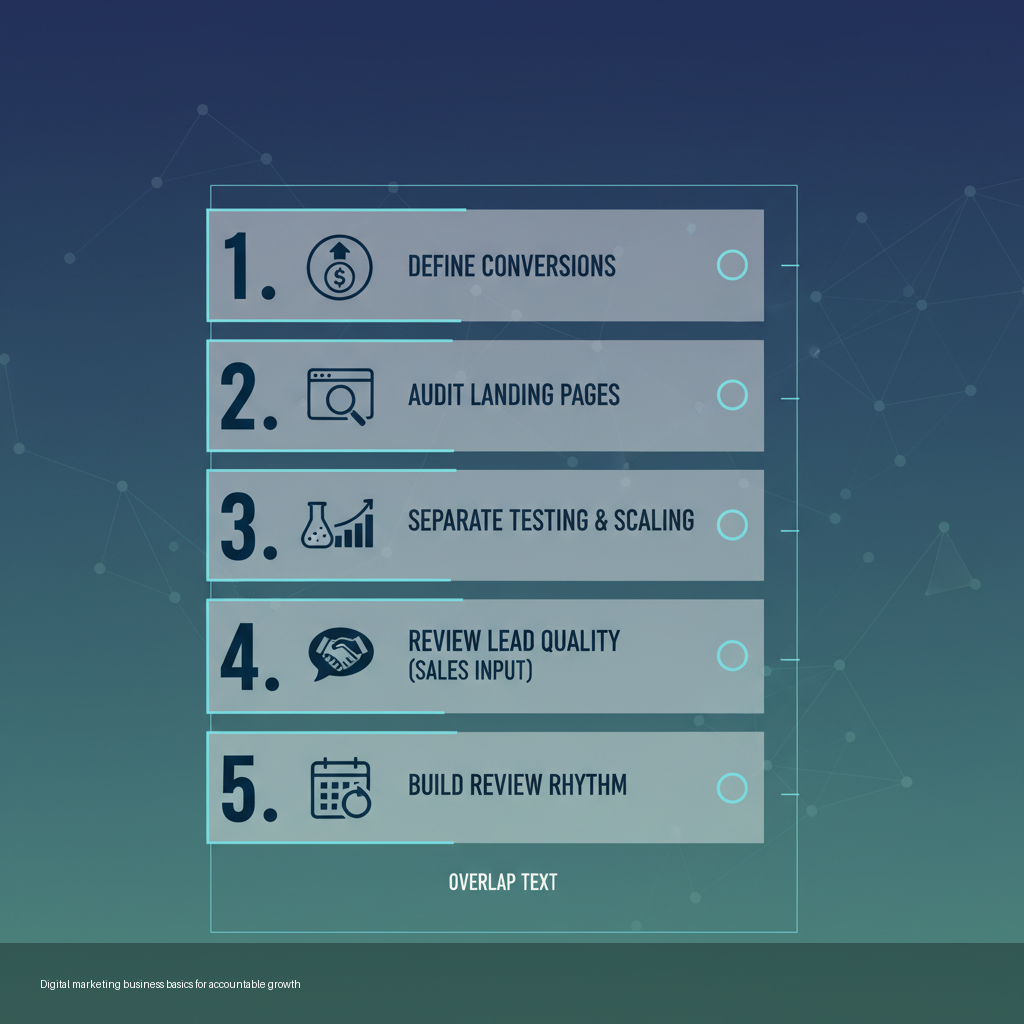
Step 1: Define the Patient Conversion
Decide which actions matter before judging performance. For a dental clinic, this may include phone calls, appointment requests, consultation forms, or online bookings.
Watch for: Reports that celebrate traffic without showing appointment enquiries.
Step 2: Audit Directory and Website Information
Check that clinic name, address, phone number, hours, service categories, and appointment links are accurate and consistent.
Watch for: Outdated listings, broken links, or mismatched contact details.
Step 3: Review Landing Pages
Make sure service pages answer patient questions clearly and make the next step easy to take.
Watch for: Vague headlines, hidden forms, weak mobile layouts, or unclear calls to action.
Step 4: Separate Testing From Scaling
Test messages, ads, or page changes before increasing spend. This helps identify which change affected performance.
Watch for: Changing ads, budgets, landing pages, and tracking at the same time.
Step 5: Review Lead Quality With the Front Desk or Intake Team
Marketing data should be compared with real enquiry quality. The team answering calls or forms can often identify whether leads are relevant.
Watch for: Campaigns that generate many enquiries but few suitable appointment requests.
Step 6: Build a Regular Review Rhythm
Set a recurring schedule to review performance, directory accuracy, website issues, content priorities, and campaign tests.
Watch for: Reports that show data but do not identify the next action.
Signs a Dental Marketing Plan Needs a Reset
A reset does not mean the clinic’s marketing has failed. It may simply mean the practice has outgrown an old website, outdated listings, weak tracking, or unclear service messaging.
Common warning signs include rising spend without better enquiry quality, more traffic without more appointment requests, inconsistent reporting between platforms, outdated directory information, and service pages that no longer reflect the clinic’s current priorities.
Short-term fixes versus system fixes
A short-term fix may pause a weak ad group or update a directory profile.
A system fix may rebuild tracking, improve landing pages, clean up local SEO, and connect enquiry quality back to source data.
The stronger path is usually to simplify first. Confirm accurate clinic information, clean up tracking, improve the highest-impact service pages, and then decide which marketing channels deserve more investment.
Getting Clear Before the Next Dental Campaign
For dental clinics, online marketing should make patient acquisition easier to understand, not harder. A dentists directory can support discovery, but measurable growth depends on how well directory visibility, SEO, paid ads, website design, content, and reporting work together.
If your clinic’s marketing reports feel busy but not useful, a structured review can identify gaps in tracking, landing pages, local visibility, and campaign priorities. For help reviewing your current channel mix and growth opportunities, Book a Free Strategy Call.
FAQs About Digital Marketing for Dentists
How does a dentists directory help digital marketing?
A dentists directory can help patients discover clinics by location, service category, and contact information. It works best when the listing connects to accurate clinic details, a clear website, and measurable enquiry tracking.
Should a dental clinic focus on SEO or paid ads first?
The better first step depends on the clinic’s goals. Paid ads can test demand and messaging faster, while SEO supports longer-term local visibility. Many clinics benefit from using paid search data to guide SEO pages and content planning.
What should dentists track in marketing reports?
Dentists should track meaningful actions such as phone calls, appointment forms, online booking clicks, consultation requests, and lead quality. Traffic and impressions are useful, but they should not be the only measure of success.
Why does website design matter for dental marketing?
Website design affects how easily patients understand services, find contact information, use forms, and book appointments. It also influences SEO, paid ad performance, mobile usability, and conversion tracking.
How can a dental clinic tell if its marketing needs improvement?
Signs include rising spend without better enquiries, outdated directory listings, unclear service pages, poor mobile experience, broken tracking, or reports that do not connect marketing activity to patient actions.