


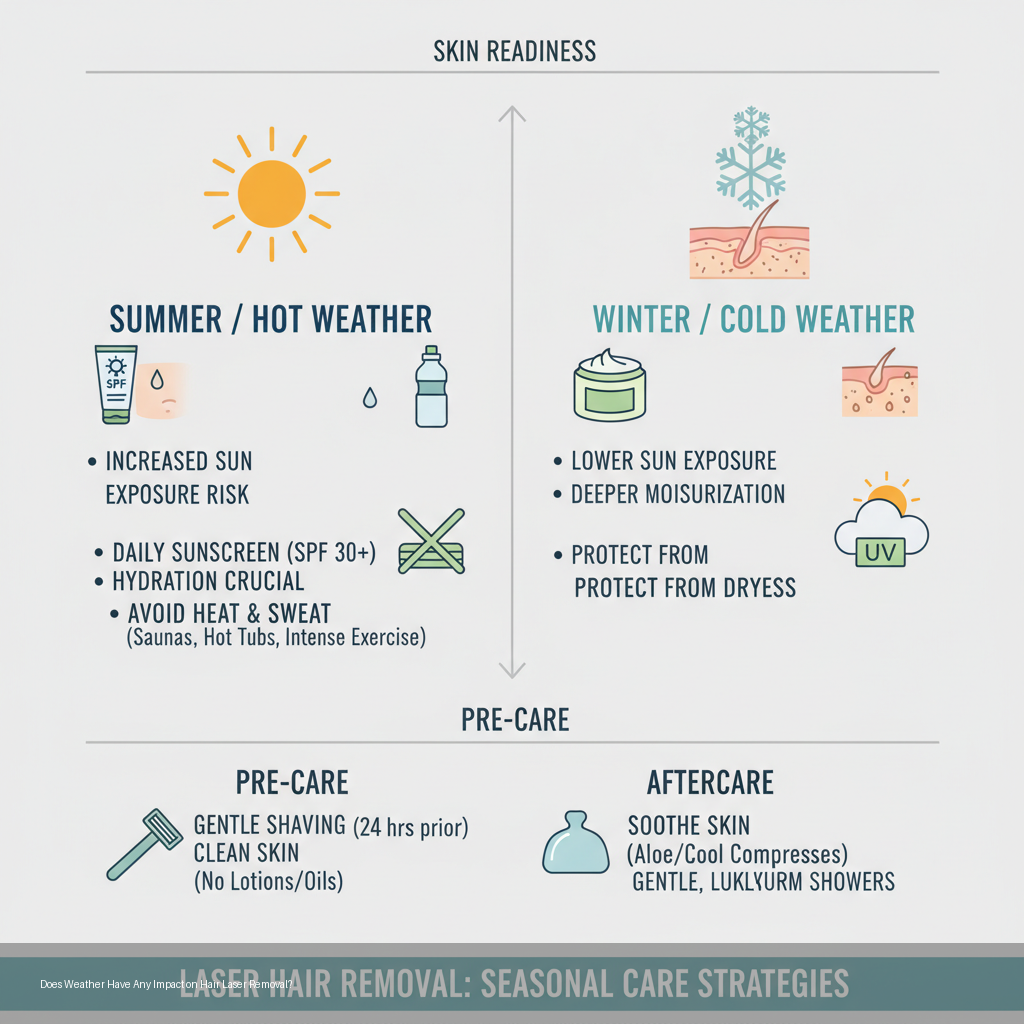
Weather can affect laser hair removal, especially when the treatment area is on the face, upper lip, chin, jawline, neck, or other areas that may also be close to dental treatment zones. The weather does not stop laser hair removal from working, but heat, sun exposure, dryness, sweat, and skin irritation can change how ready your skin is before an appointment and how carefully you should manage aftercare.
For readers using a dentists directory to plan oral health visits, the main issue is appointment timing. If you are scheduling dental cleanings, whitening, cosmetic dentistry consultations, orthodontic visits, or oral surgery, it helps to understand how facial skin sensitivity may overlap with dental care. A detailed explanation of whether weather has any impact on hair laser removal can help you plan cosmetic treatments around sun, heat, dryness, and recovery time.
The safest season for treatment is not automatically summer or winter. It is the season when your skin is calm, not recently tanned, not sunburned, not cracked from dryness, and not irritated from shaving, masks, dental procedures, or skincare products. If you are considering Laser Hair Removal, the best timing depends on both skin readiness and your broader appointment calendar.
Quick Facts: Weather, Laser Hair Removal, and Dental Appointment Planning
- Weather matters because: Heat, cold, sun, sweat, and dryness can make skin more reactive before or after laser hair removal.
- Dental patients should plan around: Facial sensitivity, mouth-area irritation, masks, numbing, oral surgery recovery, and cosmetic dentistry timelines.
- Most relevant areas: Upper lip, chin, cheeks, jawline, neck, sideburns, and any area close to the mouth.
- Best approach: Avoid recent tanning, arrive with clean and calm skin, and keep treated areas protected after the session.
- Key takeaway: Weather affects skin condition more than laser effectiveness.
Why a Dentists Directory Audience Should Care About Laser Timing
People often use a dentists directory when they are preparing for important events, improving their smile, comparing local clinics, or scheduling routine care. Around the same time, they may also book facial grooming, skincare, or laser hair removal appointments. This is common before weddings, professional photos, holidays, orthodontic milestones, or cosmetic dental work.
If laser hair removal is being done on the upper lip, chin, cheeks, or neck, the skin may feel temporarily warm, pink, or sensitive. Dental appointments can also involve lip stretching, cheek retractors, topical products, dental dams, whitening materials, or local anesthetic. These do not automatically conflict, but stacking several treatments too close together can make the area feel more irritated than necessary.
Weather adds another layer. Summer sun can increase tanning risk and post-treatment sensitivity. Winter dryness can make shaving and laser preparation less comfortable. If you are planning dental and cosmetic appointments during the same season, leave enough space for your skin and mouth area to settle between visits.
Does Weather Change Laser Hair Removal Results?
Weather does not directly change how laser technology targets hair follicles. Laser hair removal works by directing energy toward pigment in the hair shaft and follicle during growth cycles. The condition of the surrounding skin, however, can affect whether the appointment should proceed as planned.
For example, recently sunburned skin on the upper lip or chin may be too sensitive for treatment. Very dry winter skin may be more likely to sting after shaving. Sweat and friction in hot weather can irritate treated areas, especially on the neck or jawline where collars, scarves, masks, or dental bibs may touch the skin.
The important concept is skin readiness. Skin is more ready for laser hair removal when it is clean, intact, not sunburned, not recently tanned, not cracked, not inflamed, and not covered with heavy product residue.
Summer Laser Hair Removal: What Dental Patients Should Consider
Summer can still be a suitable time for laser hair removal, but it requires better sun protection and more careful scheduling. If you are treating facial areas, direct sun exposure before or after treatment may increase the chance of irritation. This matters for anyone also visiting a dental clinic, because the skin around the mouth and jaw may already be handled during the appointment.
Summer considerations
- Avoid recent tanning: A tan changes the pigment level of the skin and may affect treatment suitability.
- Protect the face: Hats, shade, and broad-spectrum sunscreen are important when treating exposed areas.
- Watch heat exposure: Hot yoga, saunas, hot tubs, and intense workouts may make treated skin feel more irritated.
- Plan around dental visits: If your dental appointment involves whitening, oral surgery, or extended mouth opening, avoid crowding facial laser sessions too closely around it.
- Consider less exposed areas: Underarms or bikini areas may be easier to manage than the upper lip or lower face during very sunny periods.
Winter Laser Hair Removal: Why It Can Be Convenient
Winter is often convenient for laser hair removal because treated areas are usually covered and there is often less direct sun exposure. For larger areas such as legs, arms, chest, or back, cooler months can make aftercare easier because clothing naturally protects the skin.
For facial laser hair removal, winter has a different concern: dryness. Cold air and indoor heating can make skin flaky, tight, or more sensitive after shaving. If you are also visiting the dentist during winter, dry lips and irritated mouth corners can make both dental care and facial treatments less comfortable.
Winter preparation tips
- Keep skin hydrated between visits: Moisturising regularly can support a smoother shave and calmer treatment surface.
- Do not arrive with heavy creams: The treatment area should be clean according to the laser clinic’s instructions.
- Use gentle shaving habits: Razor burn can delay treatment if the skin becomes irritated.
- Protect lips and mouth corners: This is especially useful when scheduling both dental appointments and upper-lip or chin laser sessions.
- Avoid treating cracked skin: Broken or inflamed skin should be assessed before laser treatment proceeds.
Facial Laser Hair Removal and Dental Appointments: How to Space Them
There is no single spacing rule that applies to every person, but it is wise not to overload the same facial area with multiple treatments in a short period. If you are having laser hair removal on the upper lip, chin, cheeks, or jawline, ask both your laser provider and dental provider whether your upcoming appointments should be spaced apart.
This is especially relevant if your dental visit includes oral surgery, periodontal treatment, whitening, cosmetic bonding, veneers, orthodontic adjustments, or anything that may make the lips, cheeks, or jaw feel tender. Even a routine cleaning can involve stretching around the mouth, so facial sensitivity should be considered.
Situations where extra spacing may help
- You have sunburn or windburn around the mouth.
- You recently had a dental procedure that left the lips, jaw, or cheeks sore.
- You are using strong skincare products near the treatment area.
- You have dry, cracked, or irritated skin from winter weather.
- You are planning teeth whitening and facial laser treatment in the same week.
- You need to wear a mask for long periods after treatment, creating friction on the treated area.
Weather-Related Pre-Care Before Laser Hair Removal
Pre-care is where weather has one of the biggest effects. The goal is to arrive with calm, clean skin that is suitable for treatment. If the skin is sunburned, recently tanned, irritated, or excessively dry, a responsible clinic may recommend delaying that area.
Before a warm-weather appointment
- Avoid tanning before treatment.
- Protect the treatment area from direct sun.
- Do not apply self-tanner to the treatment area.
- Schedule away from beach days, outdoor sports, and heat-heavy activities when possible.
- Tell your provider if the area has been sunburned recently.
Before a cold-weather appointment
- Moisturise between appointments if your provider allows it.
- Shave gently to avoid razor burn.
- Do not treat cracked, broken, or inflamed skin without assessment.
- Avoid harsh exfoliation close to the appointment unless your clinic instructs otherwise.
- Keep the facial area comfortable if you also have dental care scheduled.
Weather-Related Aftercare After Laser Hair Removal
Aftercare is important in every season. Treated skin may feel warm or look slightly pink for a short period. Weather can make this more noticeable if the area is exposed to heat, sweat, sun, cold wind, or friction.
Common aftercare themes
- Avoid excess heat: Saunas, hot tubs, hot showers, and intense workouts may increase discomfort soon after treatment.
- Protect from sun: This is especially important for the face, neck, arms, and legs.
- Reduce friction: Tight collars, scarves, masks, and rough fabrics can irritate treated skin.
- Pause harsh products: Strong exfoliants or active skincare may need to be avoided for the timeframe recommended by your provider.
- Coordinate with dental visits: If the upper lip, chin, or jawline was treated, avoid unnecessary irritation around the mouth right after laser treatment.
Laser Hair Removal vs Shaving and Waxing During Different Seasons
Many dental patients want a polished appearance before appointments, photographs, or major smile improvements. Shaving, waxing, and laser hair removal can all fit into grooming routines, but weather affects each option differently.
| Hair Removal Method | Weather Concern | Dental Appointment Consideration | Main Trade-Off |
|---|---|---|---|
| Shaving | Dry skin, razor burn, ingrown hairs, sweat irritation | Razor irritation around the mouth or jaw may feel uncomfortable during dental care. | Results are short-lived because hair is cut at the surface. |
| Waxing | Redness, heat sensitivity, sun sensitivity, friction | Upper-lip waxing too close to dental treatment may make the area feel tender. | Hair must regrow before the next wax. |
| Laser Hair Removal | Recent tanning, sunburn, dryness, or post-treatment heat exposure | Facial laser sessions should be timed thoughtfully around mouth-area dental procedures. | Requires multiple sessions because hair grows in cycles. |
Who Should Be Extra Careful With Weather and Facial Laser Timing?
Some people should take extra care when planning laser hair removal around the seasons and around dental appointments. This does not mean treatment is unsuitable. It simply means the skin should be assessed carefully before treatment.
- People who tan easily or burn easily
- People with sensitive skin around the mouth or jaw
- People using retinoids, exfoliating acids, or strong skincare products
- People prone to eczema, irritation, or pigmentation changes
- People treating the upper lip, chin, cheeks, neck, or sideburns
- People who recently had oral surgery or a dental procedure that caused facial tenderness
- People who need to wear masks for work or healthcare settings
If you are planning Laser Hair Removal for Men, weather can also affect areas such as the beard line, neck, chest, back, and shoulders. Men scheduling dental visits, professional headshots, or cosmetic dentistry may want to avoid treating the neck or beard line immediately before a long dental appointment if the skin is sensitive.
How to Choose a Laser Clinic When Your Skin Is Affected by Weather
A careful laser clinic should not treat every appointment exactly the same way. Skin condition can change based on recent sun exposure, shaving, dryness, sweating, skincare products, and other appointments. A good provider should be willing to assess the skin and adjust timing when needed.
Signs of a careful assessment
- The skin is checked before treatment: The provider looks for tanning, burns, dryness, irritation, open skin, and product residue.
- Questions are asked: You should be asked about sun exposure, skincare products, medical history, and recent treatments.
- Aftercare is specific: Instructions should address sun, heat, sweating, shaving, exfoliation, and friction.
- The plan is not rushed: If skin is not ready, postponing a specific area may be safer than forcing the session.
- Pricing is clear: Before starting, you can review Laser Hair Removal Prices and understand what is included.
What If You Are Also Planning Facial Treatments?
Facial treatments, dental visits, and laser hair removal can all involve the lower face depending on the service. If you are planning multiple appointments, ask providers how to space them so the skin barrier has time to recover.
For example, if you are treating the upper lip or chin with laser, you may want to avoid scheduling aggressive exfoliation, strong facial treatments, or dental procedures that pull around the same area too close together. If skincare is part of your routine, Facial Treatments should be planned so they do not conflict with laser timing or dental-related sensitivity.
Practical Scheduling Tips for Dental Patients
If you are using a dentists directory to coordinate appointments, it may help to think of your calendar in layers: dental care, facial skincare, laser hair removal, sun exposure, and major events. The goal is to avoid putting too much stress on the same area at the same time.
- Do not schedule facial laser hair removal over sunburned or irritated skin.
- Tell your laser provider if you recently had dental surgery or facial swelling.
- Tell your dentist if the skin around your mouth is sensitive after a recent cosmetic treatment.
- Avoid major sun exposure before and after facial laser sessions.
- Be careful with winter dryness before shaving the treatment area.
- Leave space between upper-lip laser and appointments that may stretch or irritate the lips.
- Ask both providers if you are unsure which appointment should come first.
Final Takeaway: Plan Around Skin Readiness, Not Just the Forecast
Weather can affect laser hair removal by changing the condition of your skin, but it does not automatically make one season good and another season bad. Summer requires more sun protection. Winter requires more attention to dryness. In every season, calm and protected skin is the priority.
For dental patients, the smartest approach is to coordinate facial laser hair removal with dental appointments, especially when treating the upper lip, chin, cheeks, jawline, or neck. Good scheduling can help reduce unnecessary irritation and make both your dental and cosmetic appointments more comfortable.
If you are ready to explore laser options, review the treatment details for Permanent Laser Hair Removal and speak with a qualified provider about your skin, season, and appointment timing.
FAQs About Weather, Laser Hair Removal, and Dental Visit Timing
Can I get facial laser hair removal before a dental appointment?
Possibly, but it depends on the area treated and the type of dental appointment. If the upper lip, chin, or jawline may be sensitive, ask both providers whether you should leave more time between visits.
Is summer a bad time for laser hair removal?
Summer is not automatically a bad time. The main concern is recent tanning, sunburn, and post-treatment sun exposure. If you can protect the skin properly, treatment may still be suitable.
Is winter better for starting laser hair removal?
Winter is often convenient because sun exposure is usually lower and treated areas are easier to cover. However, dry winter skin must be managed carefully before shaving and treatment.
Should I delay laser hair removal if my skin is sunburned?
Yes, sunburned or irritated skin should be assessed before treatment. A provider may recommend waiting until the skin has fully recovered.
Can dental whitening and upper-lip laser be done close together?
They may be possible close together for some people, but spacing can be helpful if the lips or mouth area feel sensitive. Ask your dental and laser providers for guidance based on the treatments involved.